
Institute of Marketing Management
Trusted by organization & traning participants in over 45 countries
Traning | Certification | Education | Research
Prospectus
Academic Year 2025-26 (Session January-February, 2026)
Post Graduate Diploma/Executive Diploma in Business Analytics (PGDBA/EDBA)
imm.igmpi.ac.inAbout IMM
Today, our world has become a concoction of commercialization and marketing. The identities in the present time are nothing but mere brands. It is very important to raise the brand value, be it for a person or a product, for it to fare in times such as these.
The idea behind Institute of Marketing Management (IMM) registered under Government of India (Reference No. 3282153) IMM and situated at the Delhi Development Authority allotted land in Qutub Institutional Area on Satsang Vihar Marg, New Delhi and near Old JNU Campus] is to increase your brand value by teaching you how to increase the value of the brand you promote.
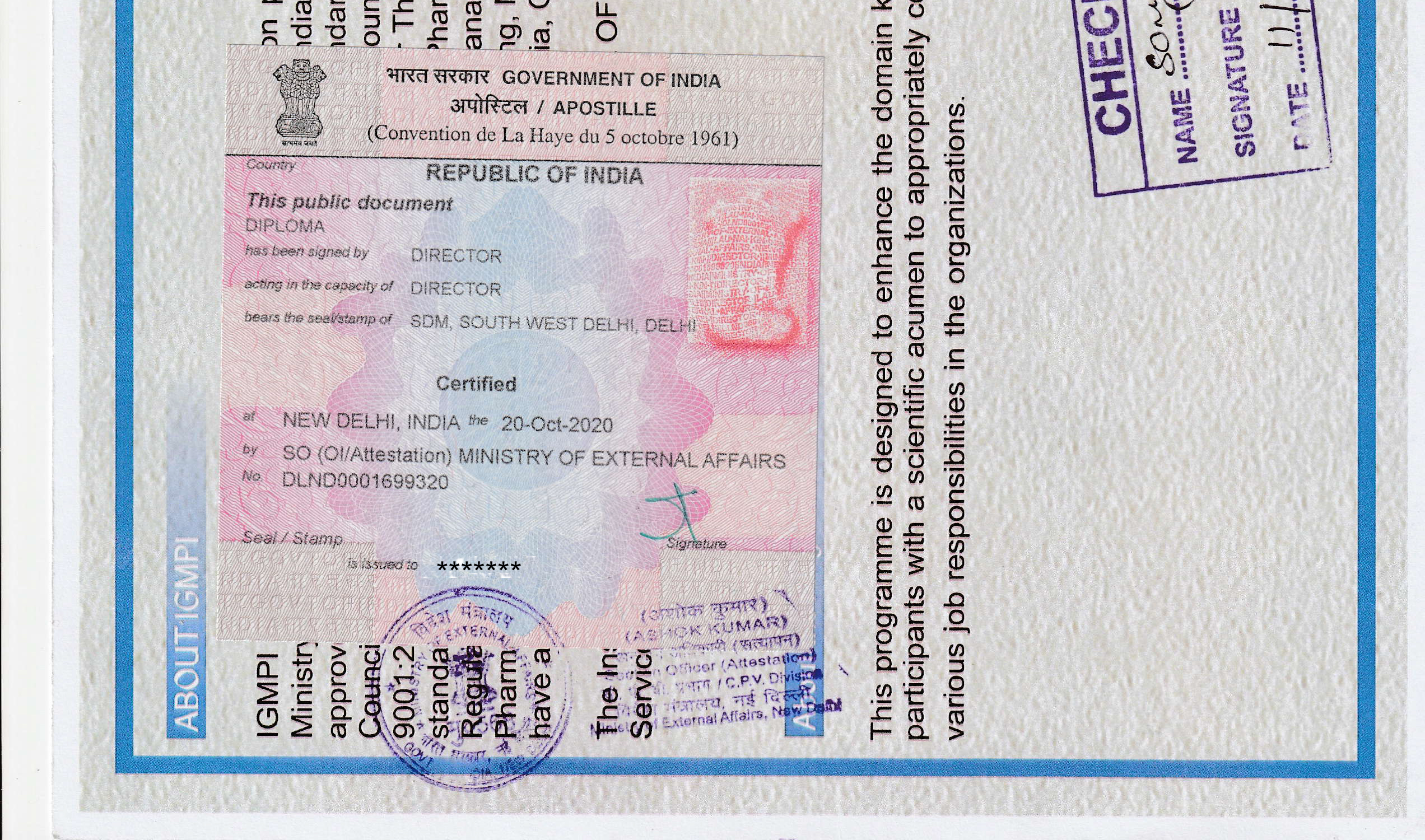
Institute of Marketing Management is Recognized by the Department for Promotion of Industry & Internal Trade, Government of India, licensed by Bureau of Indian Standards (BIS) for offering education and training programmes in the area of Marketing Management and recognized by Ministry of Commerce & Industry and incorporated under Ministry of Corporate Affairs, Government of India and conferred with Quality Council of India (QCI) and D.L. Shah National Quality Award.
The industry is posing new challenges everyday in order to provide the best quality of service to those to whom they are the most accountable- the society. IMM faces up to this challenge. It is determined to develop and grow with those connected to it. It is dedicated to those who come to it with certain expectations. It enables them to represent their work and their duties in the most effectively impressive manners
Communication is essential for those who dare to walk on the path of development. But it is not sufficient if the ultimate goal is to serve the people. To bring about a change, one must change their own self. This requires a level of guidance that rises above the present day teaching and training scenarios. World class is precisely what this situation requires in the matters of training and carving aspirants, first into rookies and further into professionals.
IMM understands the concern very well. IMM aims to provide the society with people capable of handling the jobs that they decide on.
IMM prepares you to take on the world and whatever challenges the syndicate throws at you. It prepares you to be true to your work. It prepares you to recognize your calling. It meets the needs on a per student basis. And most importantly, it makes sure to thoroughly understand what you want from the institute before it begins with the rituals.
At IMM, dealings are mostly concerned with Advertising, Digital Marketing & Advertising and Journalism. The courses vary in nature and mode. The faculty members are people who understand their parts and are driven to carry them out. There is a strict regard for manpower per trainee. Attention to details is the motto there.
IMM meets up to each elevation that the IT and the Media Industry presents. The programs are innovated as per the current situation of the trade. Trainers are given trainings and tasks to ensure capability and deliverance at equal rates.
At IMM, there is just one aim: to create a legion of creative and innovative minds who can deliver the responsibility of carrying the society from a state of oblivion to a state of information and acknowledgements.
Accreditation and Awards
The Institute of Good Manufacturing Practices India, an autonomous Institute recognised by the Ministry of Commerce & Industry, Government of India is duly licensed and certified by Bureau of Indian Standards (BIS) under Bureau of Indian Standards (Conformity Assessment) Regulations 2018 (Active license number: ERO/EOMSM/L-8000027) for offering education and training programmes in the sectors of Pharmaceutical, Food & Nutrition, Healthcare, Environmental Health & Safety, Environmental Social and Governance (ESG), Psychology, Medical Devices, Cosmetics, Remote Sensing, Health Insurance, Product & Marketing Management, Cybersecurity, Fire Safety, and Renewable Energy in the regular Diploma (full or part-time) and online modes.


IGMPI is an accredited Vocational Institution (AVI no. 710367) of the Ministry of Education, Government of India. Institute of Good Manufacturing Practices India is Management System certified under NABCB accreditation. IGMPI is also approved by Food and Life Sciences Sector Skill Councils recognized by the National Council of Vocational Education and Training (NCVET).
The Post Graduate and Executive Diploma programmes of IGMPI in Good Manufacturing Practices, Regulatory Affairs, Intellectual Property Rights, Quality Assurance and Quality Control, Public Health, Nanotechnology, Hospital Management, Product Management, Sales and Marketing Management, Clinical Research, Medical Writing, Drug Discovery and Development, Pharmacovigilance, Medical Coding have been duly assessed and approved by Quality Council of India, Government of India based on fulfillment of QCI's following criteria:
    1. Course Content
    2. Course Design
    3. Course Material
    4. Instructors
    5. Class size & Attendance
    6. Facilities
    7. Evaluation of Students
    8. Written Examination
    9. Certificate
IGMPI is also approved by Food Safety and Standards Authority of India (FSSAI) (FSSAI ID: TPINS18). IGMPI® is licensed by Department of Food Safety & Drug Administration under the Drugs and Cosmetics Act, 1940 and registered under Food Safety and Standards Act 2006.
IGMPI is also approved by Sector Skills Council under National Skill Development Corporation (NSDC) setup by Ministry of Skill Development & Entrepreneurship, Govt of India (TC ID:TC342267).
IGMPI has been conferred with the prestigious "BUREAU OF INDIAN STANDARDS (BIS) AWARD OF HONOUR 2023". QUALITY COUNCIL OF INDIA (QCI) has also conferred IGMPI with D.L. SHAH NATIONAL QUALITY AWARD, Certificate of Merit & ASSOCHAM has conferred IGMPI with the Services Excellence Award based on excellence of its services to the students and training participants.
IGMPI's Membership with IPA
IGMPI is a Lifetime Institutional member of Indian Pharmaceutical Association (IPA).

Bureau of Indian Standards (BIS)
Bureau of Indian Standards (BIS) came into existence through an act of Parliament in 1987. BIS is the National Standard Body of India established under the BIS Act 2016 for the harmonious development of the activities of standardization, marking and quality certification of goods and for matters connected therewith or incidental thereto. The Bureau is a Body consisting of 25 members representing both Central and State governments, Members of Parliament, industry, scientific and research institutions, consumer organizations and professional bodies; with Union Minister of Consumer Affairs, Food and Public Distribution as its President and with Minister of State for Consumer Affairs, Food and Public Distribution as its Vice-President.
Quality Council of India (QCI)
Quality Council of India is set up by the Government of India to establish and operate national accreditation structure and promote quality through National Quality Campaign. QCI is registered as a non-profit society with its own Memorandum of Association. QCI is governed by a Council of 38 members and Chairman of QCI is appointed by the Prime Minister on recommendation of the industry to the government. The Department of Industrial Policy & Promotion, Ministry of Commerce & Industry, is the nodal ministry for QCI.
International Recognition
For providing its education and training services to overseas students, IGMPI is registered with the Directorate General of Foreign Trade, Government of India and our Export Import Code is AADCI7680Q.
IGMPI is an Institutional Member of the International Society for Quality in Health Care

Bureau of Indian Standards (BIS) is a member of International Organization for Standardization (ISO) and through the Indian National Committee (INC) which is a member of International Electrotechnical Commission (IEC). BIS is also a member of regional standards bodies like Pacific Area Standards Congress (PASC) and South Asian Regional Standards Organization (SARSO). India started taking part in IEC from 1911 and subsequently the then Indian Standards Institution (now BIS) took over the responsibility of Indian National Committee of IEC(INC-IEC) in 1949. Since then the INC-IEC is actively participating in the activities of the IEC both at the policy level and technical work and carrying out the responsibilities as member body of IEC Council. India is a member in Standards Management Board (SMB) of IEC since 2015.BIS has also signed Bilateral Cooperation Agreements (BCA)/Mutual Recognition Agreements (MRA) with the National Standards Bodies of several countries like Afghanistan, Bangladesh, Belarus, Egypt, European Union , Germany, Ghana, Greece, Indonesia, Iran, Japan, Jordon, Kenya, Kyrgyzstan, Mali, Mauritius, Nigeria, Russia, Saudi Arabia , Slovakia, Slovenia, Suriname, USA, UAE, Uzbekistan, Viet Nam, Bhutan, Brazil, Israel, Nepal, Pakistan and Sri Lanka.
National Accreditation Board for Certification Bodies (NABCB), Quality Council of India is a member of International Accreditation Forum (IAF) & Pacific Accreditation Cooperation (PAC) as well as signatory to its MLAs for Quality Management Systems, Environmental Management Systems and Product Certification. NABCB is also a Full Member of International Laboratory Accreditation Cooperation (ILAC) & Asia Pacific Laboratory Accreditation Cooperation (APLAC) as well as signatory to its MRAs for Inspection.
Post Graduate Diploma/Executive Diploma in Business Analytics (PGDBA/EDBA)
Business analytics is a transformative tool in today’s marketplace, empowering organizations to make data-driven decisions and develop robust business strategies. With the proliferation of data across industries, the demand for professionals skilled in data analysis and interpretation has surged. According to a study by Micro Strategy, companies leverage data to enhance efficiency and productivity (64%), improve decision-making (56%), and drive financial performance (51%). Furthermore, 65% of global enterprises plan to increase their analytics spending, reflecting the growing significance of this field.
Big Data Analysis has become increasingly indispensable in today's data-driven economy. Big Data Analytics focuses on extracting valuable insights from vast and complex datasets, enabling organizations to optimize operations, enhance customer experiences, and gain competitive advantages. The course delves into foundational concepts such as the characteristics of Big Data—volume, velocity, variety, and veracity—and explores advanced techniques in data collection, integration, storage, and management using various tools.
The objective of this course is to recognize and address the challenges of applying business analytics across various business scenarios. Upon completion, students will be able to explain the different methods of business analytics and apply them to improve decision-making, operational efficiency, and financial performance. This program is designed for professionals and students aspiring to work in the field of business analytics, equipping them with the necessary skills to thrive as data analysts, business strategists, and consultants.
Programme Structure
International Affiliation with
In the IMM program, we emphasize the connection between theoretical concepts and
their practical applications, using case studies to illustrate this relationship. High-profile visiting faculty members are invited to share their experiences and real-world challenges, enhancing students' understanding. The course aims to develop both managerial and commercial skills essential for today's media industry.
Assignments are crucial for enabling students to apply their knowledge creatively. The program includes twelve modules and an additional key skills module, which features case studies. These modules offer a comprehensive and international perspective on media and management disciplines, equipping future media executives to tackle industry challenges. They also introduce several theoretical tools that are used throughout the course. The modules analyse key drivers of changing media trends and provide context for managerial decision-making, as well as teaching important skills for creating media plans.
Module 1: Foundation Concepts: Introduction to Business and Basics of Data Analysis
Module 2: Data Interpretation: Statistical Analysis
Module 3: Problem-Solving Methods: Business Analysis Techniques
Module 4: Insight Presentation: Data Visualization and Reporting
Module 5: Database Querying: SQL for Data Analysis
Module 6: Spreadsheet Mastery: Excel for Business Analysis
Module 7: Programming Skills: Python for Data Analysis
Module 8: Future Forecasting: Predictive Analytics and Machine Learning
Module 9: Data-Driven Decisions: Business Intelligence (BI) Tools
Module 10: Sophisticated Methods: Advanced Analytics Techniques
Module 11: Large-Scale Data: Advanced Big Data Analytics and Data Management
Module 12: Data Governance: Ethics, Privacy, and Security in Big Data
Module 13: Tech Integration: Strategic Management of Cloud Computing, Social Media, IoT & Sensor Data Analytics
Module 14: Practical Application: Capstone Project
Module 15: Capstone Project
Eligibility
Any graduation/ B.tech/ B.Sc. / BA / B.Pharma/ MBBS/ BDS/ BHMS/ BUMS/ BAMS or any other discipline. Diploma holders are eligible for our Executive Diploma, Industry Certificate, and Certificate Programmes.
Programme Duration
The duration to complete this programme is 1 year (Post Graduate Diploma), 6 months (Executive Diploma).
Programme Mode
Registrations are currently open for regular and online both modes.
Programme Key points
The major factors that should be pondered over while deciding a course to pursue and an institution to help along, can be kind of confusing. While this is no guide on how to choose courses to build your career, IMM prides itself on its straightforward nature. And hence, here is a list of all that this course has to present to you.
- Live interactive lectures on all the modules
- Professionally trained and experienced trainers
- Appropriately planned curriculum after hours of contemplative sessions
- Observatory sessions, interactive sessions and practical experience is given utmost priority
- Industrial touch is never lost with the constant dynamic nature of the teaching process
Examination and Certification
At the completion of the course, a final examination will be held. Those, who pass this evaluation, will be awarded with a Post Graduate Diploma or Executive Diploma in Business Analytics to validate their learnings.
Industry and Corporate Placements
Business analytics offers vast career opportunities across various industries due to its critical role in driving data-driven decision-making and strategic planning. Recently, there has been a growing demand for professionals skilled in business analytics from global industry leaders. Such as: CropIn Technology, Mu Sigma, Innovaccer, Niramai, Qure.ai, IBM Watson Health, KPMG India, The Climate Corporation, Novozymes, Fractal Analytics, Tredence, AgNext Technologies, Intello Labs, Stellapps, SatSure.
Programme Fee Details
| S.No. | Programmes | Duration | Mode | Programmes Fee |
|---|---|---|---|---|
| 1 | Post Graduate Diploma | 12 months | Part-time (Online Live Classes) | Rs.72,000/- (USD 1600) |
| 2 | Executive Diploma | 6 Months | Part-time (Online Live Classes) | Rs.48,000/- (USD 1400) |
Advisory Board and team
Our Advisory Board Members : https://igmpi.ac.in/our-advisors-and-team
Institute of Marketing Management
C-6, Qutab Institutional Area, Near Old JNU Campus, New Delhi–110016, India.
18001031071
(Toll Free -9:00 am to 5:30 pm IST-except on Central Government holidays)/
info@igmpi.ac.in