
Centre for Cyber Forensic and Cyber Security
Trusted by organization & traning participants in over 45 countries
Traning | Certification | Education | Research
Prospectus
Academic Year 2026-27
Post Graduate Diploma/ Executive Diploma in Criminology (PGDC/EDC)
ccfcs.igmpi.ac.inAbout CCFCS
The Centre for Cyber Forensic and Cyber Security (CCFCS) has been established under the aegis of IGMPI - an autonomous Institute recognised by Ministry of Commerce & Industry, accredited Vocational Institution of Ministry of Education, Government of India and licensed and certified by Bureau of Indian Standards (BIS) under Bureau of Indian Standards (Conformity Assessment) Regulations 2018. CCFCS is dedicated to strengthening India’s digital ecosystem by fostering competence, integrity, and resilience in emerging technology domains critical to national and organisational security.
In an increasingly digital and interconnected world, cyber threats have evolved beyond conventional attacks to include complex intrusions, digital fraud, cyber espionage, insider threats, and technology-enabled crimes. As organisations, governments, and individuals rely heavily on digital platforms, cloud infrastructure, and data-driven systems, the ability not only to prevent cyber incidents but also to investigate, analyse, and respond to them has become a strategic necessity. The Centre for Cyber Forensic and Cyber Security is established to address this critical need by integrating cyber security defence with cyber forensic science, digital investigation, and legal awareness.
Cyber incidents today demand more than reactive controls they require forensic readiness, evidence preservation, incident reconstruction, and legal admissibility. From ransomware attacks and data breaches to financial cybercrime and critical infrastructure threats, modern challenges demand professionals who understand both security technologies and forensic methodologies. CCFCS is positioned as a specialised training and learning platform focusing on cyber security operations, digital forensics, cyber crime investigation, regulatory compliance, data protection, cyber law, and incident response frameworks.
India continues to face a significant shortage of skilled professionals in cyber security and cyber forensics, even as cybercrime volumes and complexity grow at an unprecedented pace. Law enforcement agencies, corporate organisations, financial institutions, and government bodies require trained experts capable of analysing digital evidence, managing cyber incidents, and ensuring compliance with national and international legal frameworks. The gap between demand and available expertise highlights the urgent need for structured, industry-relevant education and professional upskilling.
To bridge this gap, the Centre for Cyber Forensic and Cyber Security offers specialised programmes for industry professionals, IT graduates, law enforcement personnel, auditors, and cyber engineers, enabling them to develop practical, analytical, and investigative capabilities. These programmes are designed to enhance career progression while strengthening organisational preparedness against cyber threats. By developing skilled practitioners and future leaders, CCFCS contributes to building a secure, resilient, and legally robust digital environment.
The Centre for Cyber Forensic and Cyber Security (CCFCS) Programmes
In the era of digital transformation and global cyber risk, organisations must ensure that their security and forensic practices align with international standards and best practices. While digitalisation accelerates innovation and efficiency, it also increases exposure to cyber risks that can result in data breaches, operational disruptions, legal liabilities, financial losses, and reputational harm. In many cases, the inability to investigate and respond effectively to cyber incidents can magnify the impact far beyond the initial attack.
Cyber security and cyber forensics are no longer isolated technical functions; they represent a shared responsibility involving leadership, technical teams, legal experts, compliance officers, and end users. Protecting digital assets, sensitive information, and customer trust requires a holistic approach that combines prevention, detection, investigation, and governance.
Operational growth, innovation, and digital adoption should not be compromised by weak cyber risk management or lack of forensic capability. Hence, it is essential to promote awareness of cyber laws, digital evidence handling, ethical practices, and secure operational behaviours that not only prevent incidents but also enable accountability, transparency, and resilience. Through its programmes, CCFCS aims to strengthen India’s capacity to respond to cyber threats with competence, confidence, and credibility.
Accreditation and Awards
The Institute of Good Manufacturing Practices India, an autonomous Institute recognised by the Ministry of Commerce & Industry, Government of India is duly licensed and certified by Bureau of Indian Standards (BIS) under Bureau of Indian Standards (Conformity Assessment) Regulations 2018 (Active license number: ERO/EOMSM/L-8000027) for offering education and training programmes in the sectors of Pharmaceutical, Food & Nutrition, Healthcare, Environmental Health & Safety, Environmental Social and Governance (ESG), Psychology, Medical Devices, Cosmetics, Remote Sensing, Health Insurance, Product & Marketing Management, Cybersecurity, Fire Safety, and Renewable Energy in the regular Diploma (full or part-time) and online modes.


IGMPI is an accredited Vocational Institution (AVI no. 710367) of the Ministry of Education, Government of India. Institute of Good Manufacturing Practices India is Management System certified under NABCB accreditation. IGMPI is also approved by Food and Life Sciences Sector Skill Councils recognized by the National Council of Vocational Education and Training (NCVET).

The Post Graduate and Executive Diploma programmes of IGMPI in Good Manufacturing Practices, Regulatory Affairs, Intellectual Property Rights, Quality Assurance and Quality Control, Public Health, Nanotechnology, Hospital Management, Product Management, Sales and Marketing Management, Clinical Research, Medical Writing, Drug Discovery and Development, Pharmacovigilance, Medical Coding have been duly assessed and approved by Quality Council of India, Government of India based on fulfillment of QCI's following criteria:
    1. Course Content
    2. Course Design
    3. Course Material
    4. Instructors
    5. Class size & Attendance
    6. Facilities
    7. Evaluation of Students
    8. Written Examination
    9. Certificate
IGMPI is also approved by Food Safety and Standards Authority of India (FSSAI) (FSSAI ID: TPINS18). IGMPI® is licensed by Department of Food Safety & Drug Administration under the Drugs and Cosmetics Act, 1940 and registered under Food Safety and Standards Act 2006.
IGMPI is also approved by Sector Skills Council under National Skill Development Corporation (NSDC) setup by Ministry of Skill Development & Entrepreneurship, Govt of India (TC ID:TC342267).
IGMPI has been conferred with the prestigious "BUREAU OF INDIAN STANDARDS (BIS) AWARD OF HONOUR 2023". QUALITY COUNCIL OF INDIA (QCI) has also conferred IGMPI with D.L. SHAH NATIONAL QUALITY AWARD, Certificate of Merit & ASSOCHAM has conferred IGMPI with the Services Excellence Award based on excellence of its services to the students and training participants.
IGMPI's Membership with IPA
IGMPI is a Lifetime Institutional member of Indian Pharmaceutical Association (IPA).

Bureau of Indian Standards (BIS)
Bureau of Indian Standards (BIS) came into existence through an act of Parliament in 1987. BIS is the National Standard Body of India established under the BIS Act 2016 for the harmonious development of the activities of standardization, marking and quality certification of goods and for matters connected therewith or incidental thereto. The Bureau is a Body consisting of 25 members representing both Central and State governments, Members of Parliament, industry, scientific and research institutions, consumer organizations and professional bodies; with Union Minister of Consumer Affairs, Food and Public Distribution as its President and with Minister of State for Consumer Affairs, Food and Public Distribution as its Vice-President.
Quality Council of India (QCI)
Quality Council of India is set up by the Government of India to establish and operate national accreditation structure and promote quality through National Quality Campaign. QCI is registered as a non-profit society with its own Memorandum of Association. QCI is governed by a Council of 38 members and Chairman of QCI is appointed by the Prime Minister on recommendation of the industry to the government. The Department of Industrial Policy & Promotion, Ministry of Commerce & Industry, is the nodal ministry for QCI.
International Recognition
For providing its education and training services to overseas students, IGMPI is registered with the Directorate General of Foreign Trade, Government of India and our Export Import Code is AADCI7680Q.
IGMPI is an Institutional Member of the International Society for Quality in Health Care

Bureau of Indian Standards (BIS) is a member of International Organization for Standardization (ISO) and through the Indian National Committee (INC) which is a member of International Electrotechnical Commission (IEC). BIS is also a member of regional standards bodies like Pacific Area Standards Congress (PASC) and South Asian Regional Standards Organization (SARSO). India started taking part in IEC from 1911 and subsequently the then Indian Standards Institution (now BIS) took over the responsibility of Indian National Committee of IEC(INC-IEC) in 1949. Since then the INC-IEC is actively participating in the activities of the IEC both at the policy level and technical work and carrying out the responsibilities as member body of IEC Council. India is a member in Standards Management Board (SMB) of IEC since 2015.BIS has also signed Bilateral Cooperation Agreements (BCA)/Mutual Recognition Agreements (MRA) with the National Standards Bodies of several countries like Afghanistan, Bangladesh, Belarus, Egypt, European Union , Germany, Ghana, Greece, Indonesia, Iran, Japan, Jordon, Kenya, Kyrgyzstan, Mali, Mauritius, Nigeria, Russia, Saudi Arabia , Slovakia, Slovenia, Suriname, USA, UAE, Uzbekistan, Viet Nam, Bhutan, Brazil, Israel, Nepal, Pakistan and Sri Lanka.
National Accreditation Board for Certification Bodies (NABCB), Quality Council of India is a member of International Accreditation Forum (IAF) & Pacific Accreditation Cooperation (PAC) as well as signatory to its MLAs for Quality Management Systems, Environmental Management Systems and Product Certification. NABCB is also a Full Member of International Laboratory Accreditation Cooperation (ILAC) & Asia Pacific Laboratory Accreditation Cooperation (APLAC) as well as signatory to its MRAs for Inspection.
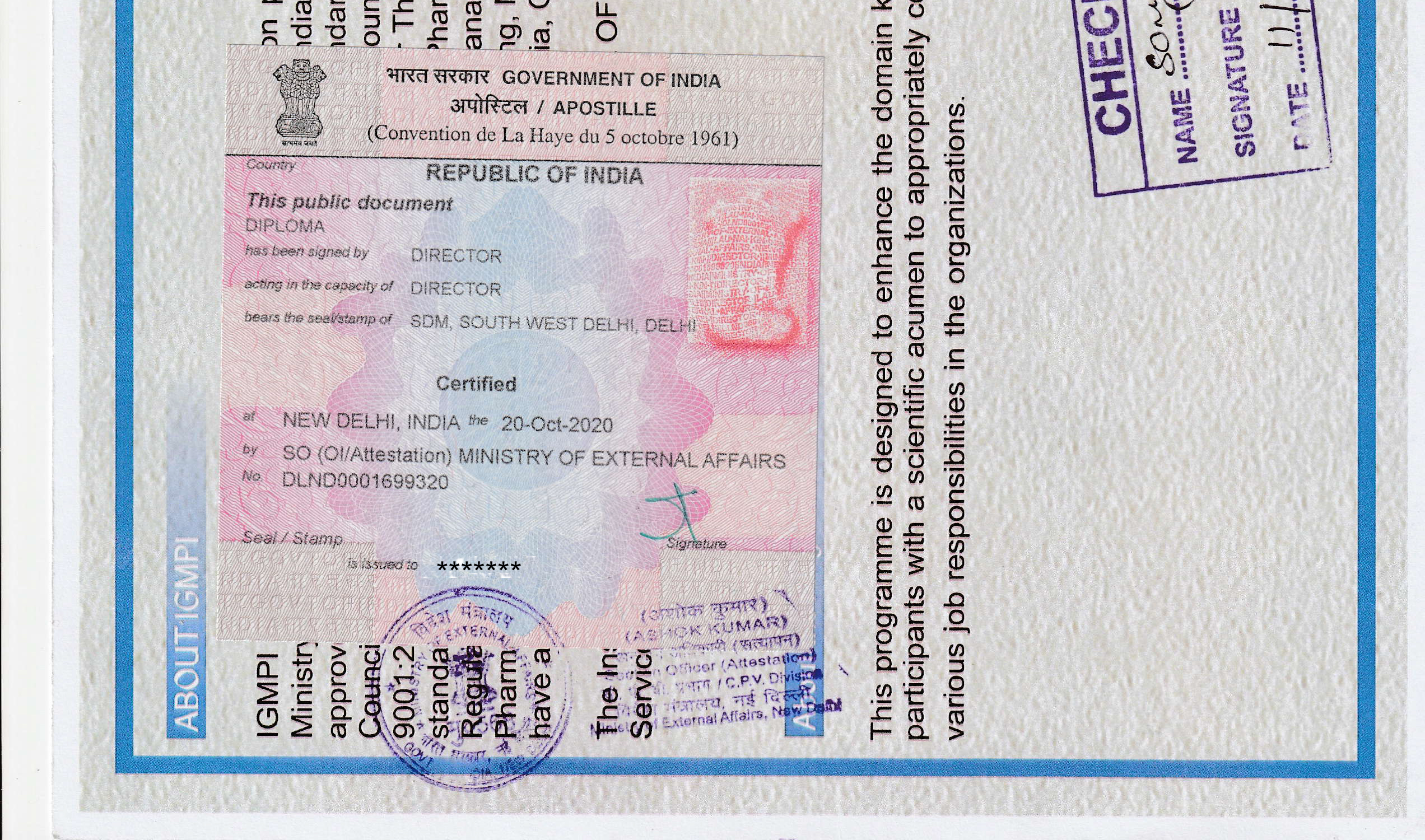
Post Graduate Diploma/ Executive Diploma in Criminology (PGDC/EDC)
The PG Diploma / Executive Diploma in Criminology is a multidisciplinary academic programme that bridges the domains of social science, criminal justice, psychology, law, and forensic inquiry to provide a comprehensive understanding of crime, criminal behaviour, and societal responses to deviance. The programme emphasizes the scientific study of crime causation, victimization, prevention, and justice administration through the integration of theoretical criminological perspectives with contemporary developments such as cybercrime, digital society, media influence, and transnational security challenges. By combining analytical research methods, legal awareness, and applied crime-prevention strategies, the curriculum prepares learners to critically examine criminal phenomena, support evidence-based policymaking, and contribute effectively to law enforcement, correctional services, community safety initiatives, and justice-oriented institutional frameworks in an increasingly complex global environment.
Programme Overview
The Criminology Programme is structured to provide a systematic and progressive understanding of crime from foundational concepts to contemporary global challenges. It is designed to move beyond descriptive knowledge and develop analytical, interpretative, and research-oriented competencies required for professional engagement within criminal justice, social policy, and security sectors.
The curriculum begins with the conceptual and historical evolution of criminology, enabling learners to critically interpret definitions of crime, deviance, and social regulation across legal and sociocultural contexts. It then advances into detailed examination of major theoretical traditions explaining criminal behaviour, encouraging comparative evaluation of biological, psychological, sociological, and integrated perspectives in relation to real-world crime patterns.
Subsequent components of the programme focus on institutional responses to crime, including policing systems, judicial processes, correctional administration, victim support mechanisms, and juvenile justice frameworks. Equal importance is given to crime prevention strategies, community-based interventions, and rights-based approaches to rehabilitation, ensuring that learners understand both control and reform dimensions of justice.
The programme also prioritizes methodological training, equipping participants with practical skills in criminological research design, data interpretation, ethical inquiry, and evidence-based reporting. Engagement with contemporary and emerging issues—such as cyber-enabled offences, terrorism, gendered violence, migration-related crime, and global security transformations—ensures academic relevance to present and future societal needs.
Through this structured academic progression, the programme seeks to cultivate critical thinking, professional ethics, and applied problem-solving abilities necessary for meaningful contribution to crime prevention, justice administration, policy development, and community safety initiatives.
Programme Structure
Module 1: Introduction to Criminology
- Definitions of crime, deviance, and social harm
- History and development of criminology
- Legal vs social understandings of crime
- Key schools of criminological thought
- Crime measurement and statistics
Module 2: Theories of Crime Causation
- Biological theories of crime
- Psychological theories of criminal behaviour
- Sociological theories (strain, conflict, labelling, social disorganization)
- Integrated and contemporary theories
- Critical evaluation of crime theories
Module 3: Crime, Media and Digital Society
- Media representation of crime and deviance
- Moral panics and public perception
- Social media, gaming, music, and crime narratives
- Digital culture and communication
- Media influence on policy and policing
Module 4: Criminal Justice System and Law
- Structure and history of the criminal justice system
- Elements of crime and criminal liability
- Structure of criminal courts
- Police organizations and functions
- Prosecution and defence
- Sentencing principles and punishment types
Module 5: Types of Crime
- Violent crimes
- Property crimes
- White-collar and corporate crime
- Cybercrime and digital offences
- Organized and transnational crime
Module 6: Victimology
- Concept and development of victimology
- Types of victims
- Victim–offender relationship
- Victimization surveys
- Victim compensation and support services
Module 7: Juvenile Delinquency
- Meaning and nature of juvenile delinquency
- Causes and risk factors
- Juvenile justice system
- Rehabilitation and correctional programmes for juveniles
- Role of family, school, and community
Module 8: Penology and Correctional Administration
- History and philosophy of punishment
- Prison systems and administration
- Probation, parole, and community corrections
- Rehabilitation and reintegration
- Prison reforms and human rights
Module 9: Crime Prevention and Control
- Theories of crime prevention
- Policing strategies and community policing
- Situational crime prevention
- Role of social policy and education
- Evaluation of crime prevention programmes
Module 10: Research Methods in Criminology
- Quantitative and qualitative research methods
- Crime data sources and measurement
- Survey design and sampling
- Ethical issues in criminological research
- Data analysis and interpretation
Module 11: Contemporary Issues in Criminology
- Terrorism and national security
- Gender and crime
- Media and crime perception
- Human trafficking and migration crimes
- Emerging trends in global criminology
Module 12: Case Study
Eligibility
Graduates in any discipline are eligible for our Post Graduate Diploma, Executive Diploma and Professional Certifications Programmes. 10+2 pass-outs are eligible for our Under Graduate Diploma and Diploma holders of two to three years course duration are also eligible for the PG Diploma.
Programme Duration
The minimum duration to complete the PG diploma programme is 12 months and maximum is 24 months. The minimum duration to complete the executive diploma programme is 6 months and maximum is 12 months.
Programme Mode
Registrations are currently open for regular and Part-time (Online Live Classes) both modes.
Programme Deliverables
A comprehensive study material for all the modules in hard copies ensuring the needs of the audience. The accompanying training material is appropriately aligned with the current Industry’s expectations.
- Assignments for all the programme modules for continuous evaluation and guidance.
- Interactive or online live sessions on all key areas of the programme giving all flexibility to the participants.
- Online classes for all the modules will be conducted on the weekends. Moreover, a doubt clearing session will also be scheduled before the examination
- All the efforts are made by IGMPI faculty members to make the entire programme modules easily understandable.
- Assessment and evaluation for all the programme modules in order to enhance the levels of competencies and skills of the participants leading towards the objective of application in the job.
- At the end of each programme modules, the trainers shall obtain feedback from the participants using specially designed questionnaires.
- All learning and training delivery initiatives shall be conducted in English.
Examination and Certification
All the participants are expected to appear for an online exam and are also obliged to submit assignments after each module. After successful completion, the participants will be awarded Post Graduate Diploma/Executive Diploma in Criminology from Centre for Cyber Forensic and Cyber Security, IGMPI. For all the above-mentioned modules, Online Classes (Online mode) or face-to-face classes (Regular mode), elaborate programme material, self-assessment assignments would be provided by the Institute. Details get updated on the webpage as well.
Discipline in Classes and Examination
Every student is required to observe a disciplined behaviour during her/his classes, assessments & examinations and to follow instructions from the Professors. Any act of indiscipline may result into discredit & it will be mentioned in her/his academic report.
Placement Assistance & Corporate Relations
The Institute has partnered with many organizations for providing with placement assistance to its participants. Besides, it has a robust placement cell comprised of senior level Human Resources professionals and Talent Acquisition experts which maintains close links with business and industry. This cell is continuously engaged in promoting the employability of our participants and encouraging the concerned Human Resources department and Hiring Managers to recruit/hire our participants for their vacant positions. The efforts of our placement cell also include helping with professional resume writing & interview skills.
Graduates of the criminology programme are suitable for professional roles across police departments, investigative and intelligence agencies, correctional services, probation and rehabilitation units, cybercrime divisions, forensic laboratories, legal consultancy firms, social defence organizations, and public policy research institutions. In India, employment opportunities may arise within organizations such as the Central Bureau of Investigation (CBI), National Investigation Agency (NIA), Intelligence Bureau (IB), Serious Fraud Investigation Office (SFIO), Central Forensic Science Laboratories (CFSL), state police and cybercrime units, and prison and probation departments.
Beyond the public sector, graduates can also pursue careers in the corporate and advisory domain, including corporate security divisions of major enterprises, compliance and risk management teams in financial institutions, and investigative or consulting roles within firms such as Deloitte, EY, KPMG, PwC, Grant Thornton, and BDO. Additional opportunities exist in cybersecurity and digital risk organizations like Tata Advanced Systems, Reliance Security, Infosys Cyber Security, Wipro Cyber Defence, and specialized risk-intelligence or due-diligence consultancies, reflecting the growing intersection between criminology, organizational governance, and digital safety management in contemporary professional environments.
Future career prospects
The future of criminology as a professional field is highly promising due to rising global concerns related to cybercrime, organized crime, terrorism, financial fraud, gender-based violence, and transnational criminal networks. Governments, international organizations, and private institutions increasingly require trained criminology professionals capable of evidence-based analysis, crime prevention planning, and justice system reform.
Emerging career pathways include: Cybercrime and Digital Investigation Specialists addressing online fraud, identity theft, and digital surveillance challenges, Crime Analysts and Intelligence Researchers supporting data-driven policing and predictive crime prevention strategies, Victim Support and Rehabilitation Professionals working in social justice, counselling, and restorative justice frameworks, Correctional and Community Supervision Officers focusing on offender rehabilitation and reintegration, Policy Advisors and Security Consultants contributing to national security planning, crime legislation, and institutional governance, Academic and Research Careers in criminology, criminal justice, forensic studies, and socio-legal research.
With increasing integration of artificial intelligence, big data analytics, and global security cooperation, criminology professionals are expected to play a crucial role in shaping humane, technologically informed, and legally sound responses to crime through 2035 and beyond.
Programme Fee Details
| S.No. | Programmes | Duration | Mode | Programmes Fee |
|---|---|---|---|---|
| 1 | Post Graduate Diploma | 12 months | Part-time (Online Live Classes) | Rs.68,000/- (USD 1650) |
| 2 | Executive Diploma | 6 Months | Part-time (Online Live Classes) | Rs.52,000/- (USD 1340) |
| 3 | Under Graduate Diploma | 12 months | Part-time (Online Live Classes) | Rs.68,000/- (USD 1650) |
| 4 | Post Graduate Diploma | 12 months | Regular Mode | Rs.1,10,000/- (USD 4620) |
| 5 | Under Graduate Diploma | 12 months | Regular Mode | Rs.1,10,000/- (USD 4620) |
*Institute of Good Manufacturing Practices India will provide a 10% fee concession on the programme fee to reserved category candidates - Scheduled Caste (SC), Scheduled Tribe (ST), Person with disability (PwD) and 5% fee concession for Other Backward Classes (OBC), Economical Weaker Session (EWS) and Ex-servicemen who enroll in PG Diploma programmes.
*Up to 30% Need-based programme fee waivers will be awarded to our PG Diploma students with excellent academic records requiring financial support from the Institute (A student’s family income is assessed based on various financial resources).
Advisory Board and team
Our Advisory Board Members : https://igmpi.ac.in/our-advisors-and-team

Centre for Cyber Forensic and Cyber Security
C-6, Qutab Institutional Area, Near Old JNU Campus, New Delhi–110016, India.
18001031071
(Toll Free -9:00 am to 5:30 pm IST-except on Central Government holidays)/
info@igmpi.ac.in