
Centre for Environmental Health and Safety
Trusted by organization & traning participants in over 45 countries
Traning | Certification | Education | Research
Prospectus
Academic Year 2026-27
Post Graduate Diploma/Executive Diploma in Development Management (PGDDM/EDDM)
cehs.igmpi.ac.inAbout CEHS
The Centre for Environmental Health and Safety (CEHS) which has been set up under the aegis of IGMPI - an autonomous Institute recognised by Ministry of Commerce & Industry, accredited Vocational Institution of Ministry of Education, Government of India and licensed and certified by Bureau of Indian Standards (BIS) under Bureau of Indian Standards (Conformity Assessment) Regulations 2018. ), is focused on advancing professional education, skill development and awareness in the interconnected fields of environment, occupational health, safety and sustainability. The Centre aims to support individuals and organisations in understanding and responding to the environmental and workplace challenges emerging from rapid industrialisation, urbanisation, technological development and climate change.
Today, environmental protection and workplace safety are no longer viewed as separate organisational responsibilities. Businesses and institutions are increasingly expected to create safe and healthy workplaces, manage environmental impacts, use resources responsibly, comply with applicable requirements and integrate sustainability into decision-making. CEHS seeks to contribute to this transition by developing professionals who can understand these interconnected challenges and apply their knowledge in practical settings.
Through its academic and professional programmes, CEHS provides opportunities for graduates, working professionals, environmental practitioners, safety professionals, engineers, managers and individuals seeking to develop specialised competencies. The Centre's programmes are designed to support both career development and continuous professional learning in areas that are increasingly important across industries and sectors.
CEHS offers programmes covering a broad range of contemporary subjects, including Environmental Health and Safety, Industrial Safety Management, Environmental Management, Environmental Impact Assessment, Environmental Law and Policy, ESG, Climate Change, Sustainable Development, Waste Management, Renewable Energy, Life Cycle Assessment, Circular Economy, Carbon Management, Behaviour-Based Safety and AI and Data for Environmental Sustainability. This multidisciplinary approach reflects the changing nature of environmental and safety responsibilities in modern organisations.
A key focus of CEHS is to make professional learning practical, relevant and connected to real-world situations. Learning is supported through contemporary examples, case studies, industry practices, regulatory developments, applied concepts and discussions around emerging environmental and occupational challenges. The objective is not simply to provide information, but to help learners develop the ability to analyse problems, assess risks, understand regulatory and organisational requirements and identify practical solutions.
The Centre also recognises the importance of developing a strong culture of prevention. Effective environmental and safety management begins with awareness but requires much more than compliance alone. It involves responsible leadership, informed decision-making, risk identification, employee participation, resource efficiency and a commitment to continual improvement. CEHS promotes these principles through its professional learning initiatives and encourages learners to look at environmental and safety challenges from both technical and organisational perspectives.
As sustainability continues to influence business strategies and public policy, professionals are increasingly required to understand areas such as climate resilience, ESG, resource efficiency, circular economy, environmental governance, sustainable production and responsible risk management. CEHS seeks to keep its learning portfolio responsive to these changing requirements and emerging areas of professional practice.
The Centre also places importance on continuous learning and professional upskilling. Environmental regulations, technologies, standards, workplace practices and sustainability expectations continue to evolve. CEHS therefore aims to provide learners with opportunities to update their knowledge, strengthen their professional capabilities and remain prepared for changing responsibilities within their respective fields.
CEHS brings together the perspectives of environmental management, occupational health and safety, sustainability, regulatory awareness and professional development. This integrated approach reflects the understanding that healthy people, safe workplaces, responsible organisations and a healthy environment are closely connected.
Our Commitment
At CEHS, our commitment is to promote knowledge that can be applied, skills that can create impact and learning that remains relevant to changing professional needs. We strive to support the development of capable professionals who can contribute to safer workplaces, better environmental management, responsible organisational practices and sustainable development.
We believe that meaningful progress is achieved when economic development goes hand in hand with environmental responsibility, human well-being and safety. Through education, professional training and continuous skill development, CEHS aims to contribute to a workforce that is better prepared to address today's challenges and shape a safer, healthier and more sustainable future.
Accreditation and Awards
The Institute of Good Manufacturing Practices India, an autonomous Institute recognised by the Ministry of Commerce & Industry, Government of India is duly licensed and certified by Bureau of Indian Standards (BIS) under Bureau of Indian Standards (Conformity Assessment) Regulations 2018 (Active license number: ERO/EOMSM/L-8000027) for offering education and training programmes in the sectors of Pharmaceutical, Food & Nutrition, Healthcare, Environmental Health & Safety, Environmental Social and Governance (ESG), Psychology, Medical Devices, Cosmetics, Remote Sensing, Health Insurance, Product & Marketing Management, Cybersecurity, Fire Safety, and Renewable Energy in the regular Diploma (full or part-time) and online modes.


IGMPI is an accredited Vocational Institution (AVI no. 710367) of the Ministry of Education, Government of India. Institute of Good Manufacturing Practices India is Management System certified under NABCB accreditation. IGMPI is also approved by Food and Life Sciences Sector Skill Councils recognized by the National Council of Vocational Education and Training (NCVET).
The Post Graduate and Executive Diploma programmes of IGMPI in Good Manufacturing Practices, Regulatory Affairs, Intellectual Property Rights, Quality Assurance and Quality Control, Public Health, Nanotechnology, Hospital Management, Product Management, Sales and Marketing Management, Clinical Research, Medical Writing, Drug Discovery and Development, Pharmacovigilance, Medical Coding have been duly assessed and approved by Quality Council of India, Government of India based on fulfillment of QCI's following criteria:
    1. Course Content
    2. Course Design
    3. Course Material
    4. Instructors
    5. Class size & Attendance
    6. Facilities
    7. Evaluation of Students
    8. Written Examination
    9. Certificate
IGMPI is also approved by Food Safety and Standards Authority of India (FSSAI) (FSSAI ID: TPINS18). IGMPI® is licensed by Department of Food Safety & Drug Administration under the Drugs and Cosmetics Act, 1940 and registered under Food Safety and Standards Act 2006.
IGMPI is also approved by Sector Skills Council under National Skill Development Corporation (NSDC) setup by Ministry of Skill Development & Entrepreneurship, Govt of India (TC ID:TC342267).
IGMPI has been conferred with the prestigious "BUREAU OF INDIAN STANDARDS (BIS) AWARD OF HONOUR 2023". QUALITY COUNCIL OF INDIA (QCI) has also conferred IGMPI with D.L. SHAH NATIONAL QUALITY AWARD, Certificate of Merit & ASSOCHAM has conferred IGMPI with the Services Excellence Award based on excellence of its services to the students and training participants.
IGMPI's Membership with IPA
IGMPI is a Lifetime Institutional member of Indian Pharmaceutical Association (IPA).
Bureau of Indian Standards (BIS)
Bureau of Indian Standards (BIS) came into existence through an act of Parliament in 1987. BIS is the National Standard Body of India established under the BIS Act 2016 for the harmonious development of the activities of standardization, marking and quality certification of goods and for matters connected therewith or incidental thereto. The Bureau is a Body consisting of 25 members representing both Central and State governments, Members of Parliament, industry, scientific and research institutions, consumer organizations and professional bodies; with Union Minister of Consumer Affairs, Food and Public Distribution as its President and with Minister of State for Consumer Affairs, Food and Public Distribution as its Vice-President.
Quality Council of India (QCI)
Quality Council of India is set up by the Government of India to establish and operate national accreditation structure and promote quality through National Quality Campaign. QCI is registered as a non-profit society with its own Memorandum of Association. QCI is governed by a Council of 38 members and Chairman of QCI is appointed by the Prime Minister on recommendation of the industry to the government. The Department of Industrial Policy & Promotion, Ministry of Commerce & Industry, is the nodal ministry for QCI.
International Recognition
For providing its education and training services to overseas students, IGMPI is registered with the Directorate General of Foreign Trade, Government of India and our Export Import Code is AADCI7680Q.
IGMPI is an Institutional Member of the International Society for Quality in Health Care

Bureau of Indian Standards (BIS) is a member of International Organization for Standardization (ISO) and through the Indian National Committee (INC) which is a member of International Electrotechnical Commission (IEC). BIS is also a member of regional standards bodies like Pacific Area Standards Congress (PASC) and South Asian Regional Standards Organization (SARSO). India started taking part in IEC from 1911 and subsequently the then Indian Standards Institution (now BIS) took over the responsibility of Indian National Committee of IEC(INC-IEC) in 1949. Since then the INC-IEC is actively participating in the activities of the IEC both at the policy level and technical work and carrying out the responsibilities as member body of IEC Council. India is a member in Standards Management Board (SMB) of IEC since 2015.BIS has also signed Bilateral Cooperation Agreements (BCA)/Mutual Recognition Agreements (MRA) with the National Standards Bodies of several countries like Afghanistan, Bangladesh, Belarus, Egypt, European Union , Germany, Ghana, Greece, Indonesia, Iran, Japan, Jordon, Kenya, Kyrgyzstan, Mali, Mauritius, Nigeria, Russia, Saudi Arabia , Slovakia, Slovenia, Suriname, USA, UAE, Uzbekistan, Viet Nam, Bhutan, Brazil, Israel, Nepal, Pakistan and Sri Lanka.
National Accreditation Board for Certification Bodies (NABCB), Quality Council of India is a member of International Accreditation Forum (IAF) & Pacific Accreditation Cooperation (PAC) as well as signatory to its MLAs for Quality Management Systems, Environmental Management Systems and Product Certification. NABCB is also a Full Member of International Laboratory Accreditation Cooperation (ILAC) & Asia Pacific Laboratory Accreditation Cooperation (APLAC) as well as signatory to its MRAs for Inspection.
Post Graduate Diploma/Executive Diploma in Development Management (PGDDM/EDDM)
Development Management encompasses the strategic planning, implementation, and evaluation of policies, programs, and projects aimed at fostering sustainable socio-economic progress and human well-being in societies. It integrates principles from various disciplines including economics, public policy, governance, and social sciences to address complex development challenges. Key components of Development Management include understanding development theories, formulating effective policies, promoting inclusive governance, and ensuring the efficient allocation of resources.
This Development Management course offers a comprehensive exploration of the principles, theories, and practices crucial for addressing contemporary development challenges. Over the course's duration, students delve into multifaceted topics, starting with an overview of Development Management's significance and foundational concepts in development theory, policies, and programs. They progress to examine critical aspects such as Development Administration and Governance, Sustainable Development Goals (SDGs), Demography, and Economics for Development. Further modules cover Public Policy formulation, Management principles application, and effective Communication strategies. Special emphasis is placed on engaging communities, leveraging Information Communication Technologies (ICTs), and mastering data management and analysis. The course concludes by delving into livelihoods, skills, and enterprise development, emphasizing sustainable approaches and value chain dynamics. By fostering a comprehensive understanding of these concepts and practices, the course prepares students to become adept practitioners capable of driving inclusive and sustainable development initiatives across diverse contexts.
Programme Modules:
Module 1: Introduction to Development Management
- Overview and significance of Development Management
- Key concepts in development theory, policies, and programs
Module 2: Development Administration and Governance
- Principles of development administration
- Public-private partnerships
- Effective governance practices
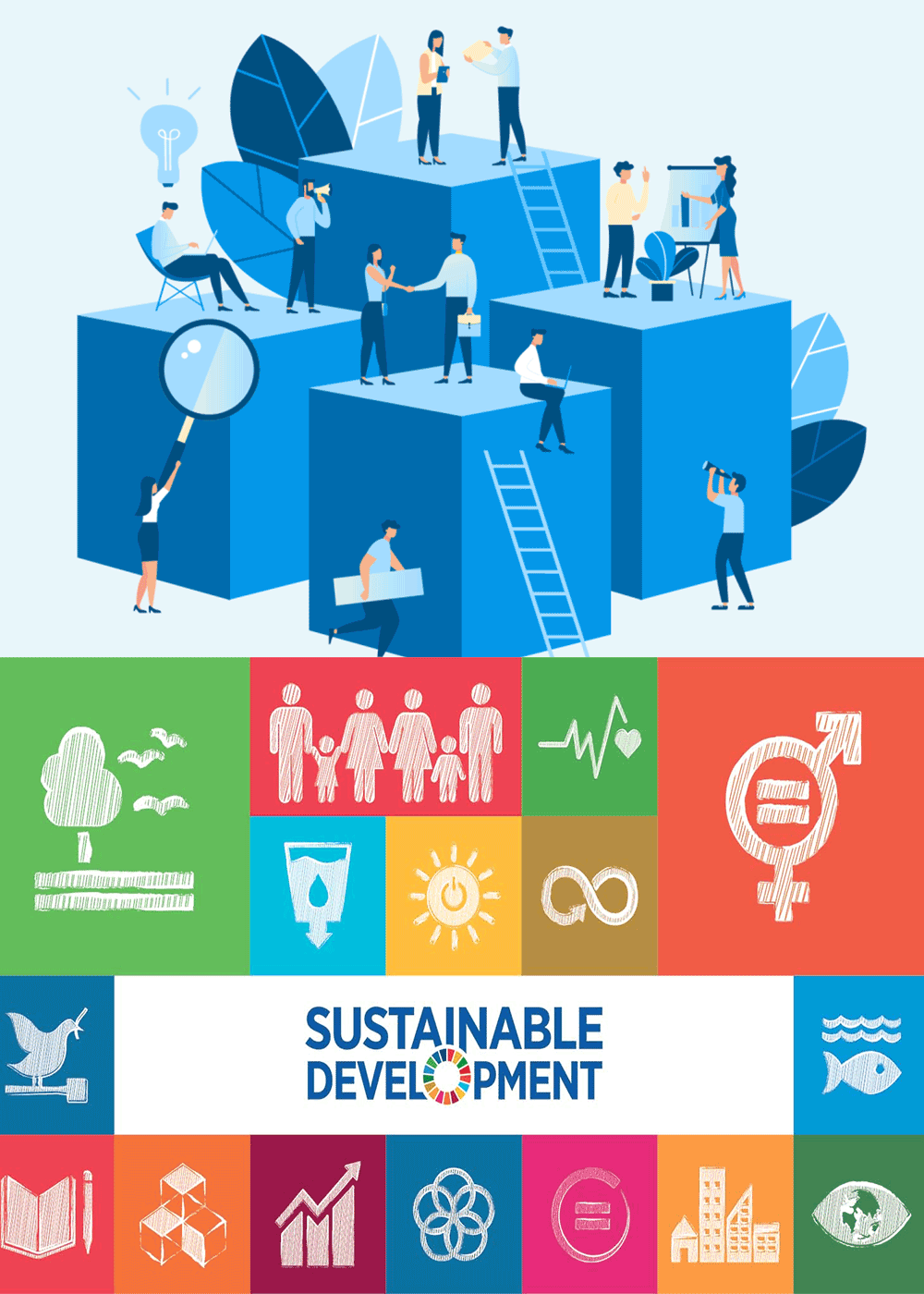
Module 3: Sustainable Development Goals (SDGs)
- Understanding the SDGs framework
- Integration into national strategies
- Monitoring and evaluation techniques
Module 4: Demography and Development
- Impact of demographic trends
- Gender, age, and migration dynamics
- Policies addressing demographic challenges
Module 5: Essentials of Economics for Development
- Basic economic concepts
- Economic growth vs. development
- Poverty reduction strategies
Module 6: Public Policy and Governance
- Policy formulation and implementation
- Government role in policy-making
- Policy analysis techniques
Module 7: Principles of Management in Development
- Management principles application in development
- Leadership, decision-making, communication
- Project management techniques
Module 8: Communication for Development
- Role of communication in development
- Behaviour change strategies
- Communication approaches
Module 9: Engaging Communities in Development
- Community development
- Mobilization techniques
Module 10: Information Communication Technology for Development
- Role of ICTs in development
- ICT projects in development
Module 11: Data Management and Analysis
- Data collection methods
- Data management techniques
Module 12: Livelihoods, Skills, and Enterprises
- Sustainable livelihoods approaches
- Types of Skills
- Skills development
- Strategies for enterprise promotion and access to finance
- Value Chain Development
Module 13: Quality Education and Governance
- Quality education for development
- Quality Management Techniques
- Methods and frameworks of Governance of Quality
Module 14: Social Entrepreneurship
- Definition and characteristics
- Business models
- Challenges and opportunities
Module 15: Case Studies and Best Practices in Development Management
Eligibility
Graduates in any discipline are eligible for our Post Graduate Diploma, Executive Diploma and Professional Certifications Programmes. 10+2 pass-outs are eligible for our Under Graduate Diploma and Diploma holders of two to three years course duration are also eligible for the PG Diploma.
Programme Duration
The minimum duration to complete the PG diploma programme is 12 months and maximum is 24 months. The minimum duration to complete the executive diploma programme is 6 months and maximum is 12 months.
Programme Mode
Registrations are currently open for regular and Part-time (Online Live Classes) both modes.
Programme Deliverables
A comprehensive study material for all the modules in hard copies ensuring the needs of the audience. The accompanying training material is appropriately aligned with the current Industry’s expectations.
- Assignments for all the programme modules for continuous evaluation and guidance.
- Interactive or online live sessions on all key areas of the programme giving all flexibility to the participants.
- Online Live Classes/Part-time for all the modules will be conducted on the weekends. Moreover, a doubt clearing session will also be scheduled before the examination.
- All the efforts are made by IGMPI faculty members to make the entire programme modules easily understandable.
- Assessment and evaluation for all the programme modules in order to enhance the levels of competencies and skills of the participants leading towards the objective of application in the job.
- At the end of each programme modules, the trainers shall obtain feedback from the participants using specially designed questionnaires.
- All learning and training delivery initiatives shall be conducted in English.
Examination & Certification
All the participants are expected to appear for an online exam and are also obliged to submit assignments after each module. After successful completion, the participants will be awarded Post Graduate Diploma/Executive Diploma in Development Management by Centre for Environmental Health and Safety, IGMPI. For all the above-mentioned modules, Online Live Classes/Part-time or face-to-face classes (Regular mode), elaborate programme material, self-assessment assignments would be provided by the Institute. Details get updated on the webpage as well.
Discipline in Classes and Examination
Every student is required to observe a disciplined behaviour during her/his classes, assessments & examinations and to follow instructions from the Professors. Any act of indiscipline may result into discredit & it will be mentioned in her/his academic report.
Placement Assistance & Corporate Relations
The Institute has partnered with many organizations for providing with placement assistance to its participants. Besides, it has a robust placement cell comprised of senior level Human Resources professionals and Talent Acquisition experts which maintains close links with business and industry. This cell is continuously engaged in promoting the employability of our participants and encouraging the concerned Human Resources department and Hiring Managers to recruit/hire our participants for their vacant positions. The efforts of our placement cell also include helping with professional resume writing & interview skills.
In recent months the Institute has witnessed more and more participation from professionals working with global pharmaceutical, IT and Healthcare like Abbott Laboratories, Infosys Ltd., Dell Technologies, Accenture, Mobikwik, Novo Nordisk, Merck Group, Optum, American Express, Allegis Group, IBM, Cardinal Health, Wipro Limited, Tata Consultancy Services, Aster DM Healthcare, Merck Group, etc. The IGMPI’s Corporate Resource Division actively recommends our students and training participants for various job requirements and specialized roles to Human Resource, Talent Acquisition as well as the heads of various departments in Pharmaceutical, Healthcare industries on regular basis.
Future career prospects
Future career prospects in Development Management are promising, offering opportunities to work in various sectors such as international development organizations, government agencies, non-profit organizations, consulting firms, and academia. Graduates can pursue roles as project managers, program coordinators, policy analysts, and development specialists, focusing on areas like poverty alleviation, sustainable development, social inclusion, and environmental conservation. With globalization and increasing interconnectedness, there's a growing demand for professionals skilled in navigating complex development challenges, particularly in emerging economies and post-conflict regions. Moreover, the adoption of innovative technologies, data-driven decision-making, and inclusive approaches further expands the scope of career opportunities in Development Management. As the world continues to grapple with issues such as climate change, inequality, and public health crises, individuals with expertise in development management will play a crucial role in driving positive change and shaping a more equitable and sustainable future.
Programme Fee Details
| S.No. | Programmes | Duration | Mode | Programmes Fee |
|---|---|---|---|---|
| 1 | Post Graduate Diploma | 12 months | Part-time (Online Live Classes) | Rs.88,700/- (USD 1650) |
| 2 | Under Graduate Diploma | 12 months | Part-time (Online Live Classes) | Rs.88,700/- (USD 1650) |
| 3 | Executive Diploma | 6 Months | Part-time (Online Live Classes) | Rs.68,500/- (USD 1340) |
| 4 | Post Graduate Diploma | 12 months | Regular Mode | Rs.1,10,000/- (USD 4620) |
| 5 | Under Graduate Diploma | 12 months | Regular Mode | Rs.1,10,000/- (USD 4620) |
*Institute of Good Manufacturing Practices India will provide a 10% fee concession on the programme fee to reserved category candidates - Scheduled Caste (SC), Scheduled Tribe (ST), Person with disability (PwD) and 5% fee concession for Other Backward Classes (OBC), Economical Weaker Session (EWS) and Ex-servicemen who enroll in PG Diploma programmes.
*Up to 30% Need-based programme fee waivers will be awarded to our PG Diploma students with excellent academic records requiring financial support from the Institute (A student’s family income is assessed based on various financial resources).
Advisory Board and team
Our Advisory Board Members : https://igmpi.ac.in/our-advisors-and-team
Centre for Environmental Health and Safety
C-6, Qutab Institutional Area, Near Old JNU Campus, New Delhi–110016, India.
18001031071
(Toll Free -9:00 am to 5:30 pm IST-except on Central Government holidays)/
info@igmpi.ac.in