Centre for Sustainable Agriculture Technology
Trusted by organization & traning participants in over 45 countries
Traning | Certification | Education | Research
Prospectus
Academic Year 2026-27
Post Graduate Diploma/Executive Diploma in Hydroponics and Soilless Agriculture (PGDHSA/EDHSA)
csat.igmpi.ac.inAbout CSAT
Centre for Sustainable Agriculture Technology (CSAT) has been established under the aegis of the Institute of Good Manufacturing Practices India (IGMPI)-an autonomous Institute recognised by Ministry of Commerce & Industry, accredited Vocational Institution of Ministry of Education, Government of India, approved by Food Safety and Standards Authority of India (FSSAI) and licensed and certified by Bureau of Indian Standards (BIS) under Bureau of Indian Standards (Conformity Assessment) Regulations 2018. CSAT is designed as a forward-thinking, interdisciplinary platform dedicated to advancing sustainable, technology-driven agricultural practices in alignment with global standards and regulatory frameworks.
In an era of increasing focus on food security, climate resilience, and efficient resource utilization, CSAT aims to bridge the gap between traditional agriculture and modern innovation. We cover a wide spectrum of domains including precision farming, organic agriculture, agri-business management, farm mechanization, hydroponics, and climate-smart agriculture, ensuring a holistic approach to the agri-food ecosystem.
Our multidisciplinary team of experts from agronomy, agricultural engineering, food technology, environmental science, and rural development delivers industry-relevant education and training. By integrating advanced technologies such as Artificial Intelligence, IoT, and data analytics, we equip learners with the skills needed to address real-world agricultural challenges.
We are proud to uphold high standards of academic excellence and industry alignment, with certifications and approvals that ensure credibility, compliance, and global recognition. Our commitment is to foster a new generation of agriculture professionals, entrepreneurs, and policymakers who can lead the transition towards a resilient and sustainable agri-food system.
CSAT offers flexible learning formats—online, hybrid, and on-campus—catering to students, professionals, farmers, and entrepreneurs. Our goal is to nurture skilled individuals who can contribute to building a sustainable, resilient, and innovation-driven agricultural sector.
Accreditation and Awards
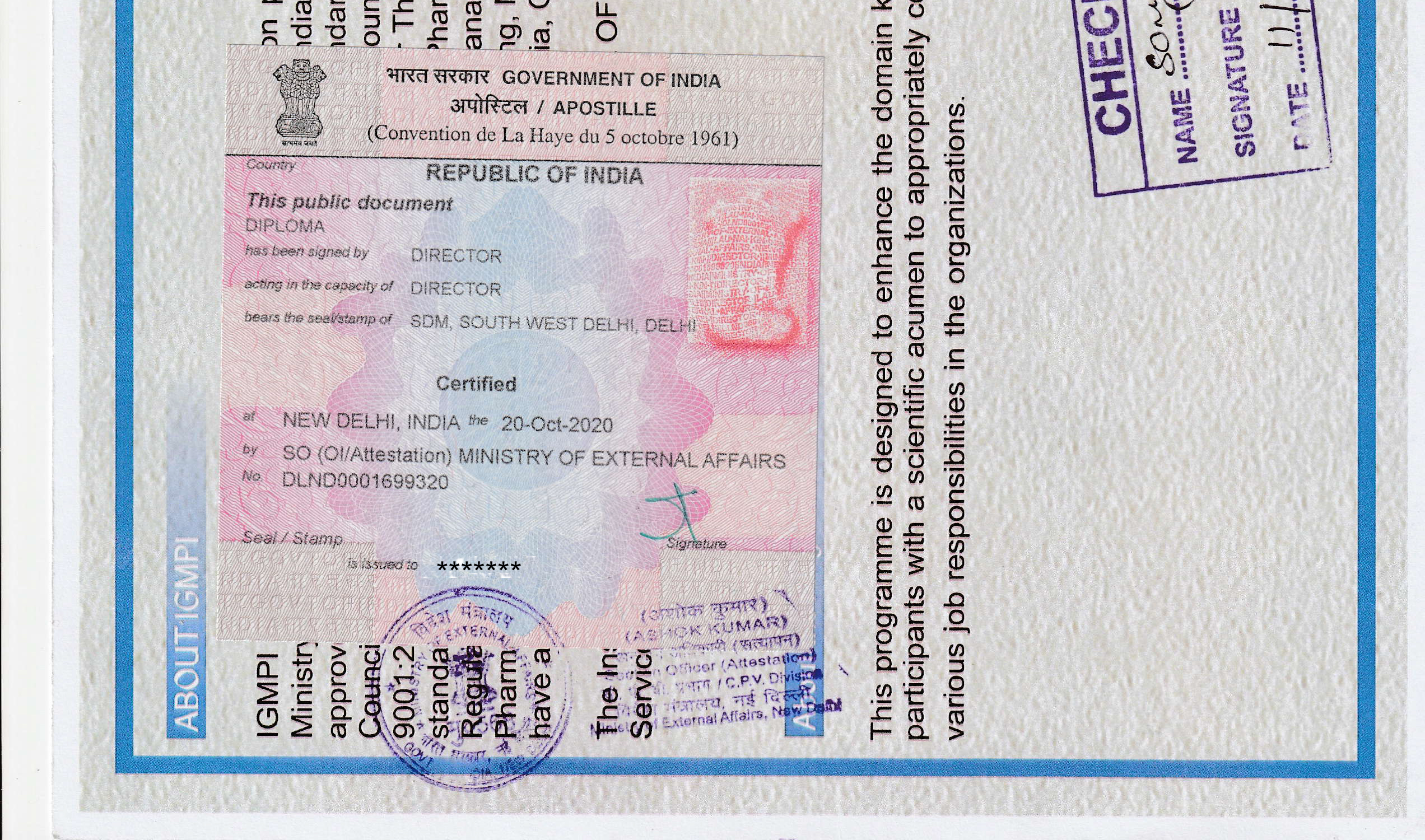
The Institute of Good Manufacturing Practices India, an autonomous Institute recognised by the Ministry of Commerce & Industry, Government of India is duly licensed and certified by Bureau of Indian Standards (BIS) under Bureau of Indian Standards (Conformity Assessment) Regulations 2018 (Active license number: ERO/EOMSM/L-8000027) for offering education and training programmes in the sectors of Pharmaceutical, Food & Nutrition, Healthcare, Environmental Health & Safety, Environmental Social and Governance (ESG), Psychology, Medical Devices, Cosmetics, Remote Sensing, Health Insurance, Product & Marketing Management, Cybersecurity, Fire Safety, and Renewable Energy in the regular Diploma (full or part-time) and online modes.


IGMPI is an accredited Vocational Institution (AVI no. 710367) of the Ministry of Education, Government of India. Institute of Good Manufacturing Practices India is Management System certified under NABCB accreditation. IGMPI is also approved by Food and Life Sciences Sector Skill Councils recognized by the National Council of Vocational Education and Training (NCVET).
The Post Graduate and Executive Diploma programmes of IGMPI in Good Manufacturing Practices, Regulatory Affairs, Intellectual Property Rights, Quality Assurance and Quality Control, Public Health, Nanotechnology, Hospital Management, Product Management, Sales and Marketing Management, Clinical Research, Medical Writing, Drug Discovery and Development, Pharmacovigilance, Medical Coding have been duly assessed and approved by Quality Council of India, Government of India based on fulfillment of QCI's following criteria:
    1. Course Content
    2. Course Design
    3. Course Material
    4. Instructors
    5. Class size & Attendance
    6. Facilities
    7. Evaluation of Students
    8. Written Examination
    9. Certificate
IGMPI is also approved by Food Safety and Standards Authority of India (FSSAI) (FSSAI ID: TPINS18). IGMPI® is licensed by Department of Food Safety & Drug Administration under the Drugs and Cosmetics Act, 1940 and registered under Food Safety and Standards Act 2006.
IGMPI is also approved by Sector Skills Council under National Skill Development Corporation (NSDC) setup by Ministry of Skill Development & Entrepreneurship, Govt of India (TC ID:TC342267).
IGMPI has been conferred with the prestigious "BUREAU OF INDIAN STANDARDS (BIS) AWARD OF HONOUR 2023". QUALITY COUNCIL OF INDIA (QCI) has also conferred IGMPI with D.L. SHAH NATIONAL QUALITY AWARD, Certificate of Merit & ASSOCHAM has conferred IGMPI with the Services Excellence Award based on excellence of its services to the students and training participants.
IGMPI's Membership with IPA
IGMPI is a Lifetime Institutional member of Indian Pharmaceutical Association (IPA).
Bureau of Indian Standards (BIS)
Bureau of Indian Standards (BIS) came into existence through an act of Parliament in 1987. BIS is the National Standard Body of India established under the BIS Act 2016 for the harmonious development of the activities of standardization, marking and quality certification of goods and for matters connected therewith or incidental thereto. The Bureau is a Body consisting of 25 members representing both Central and State governments, Members of Parliament, industry, scientific and research institutions, consumer organizations and professional bodies; with Union Minister of Consumer Affairs, Food and Public Distribution as its President and with Minister of State for Consumer Affairs, Food and Public Distribution as its Vice-President.
Quality Council of India (QCI)
Quality Council of India is set up by the Government of India to establish and operate national accreditation structure and promote quality through National Quality Campaign. QCI is registered as a non-profit society with its own Memorandum of Association. QCI is governed by a Council of 38 members and Chairman of QCI is appointed by the Prime Minister on recommendation of the industry to the government. The Department of Industrial Policy & Promotion, Ministry of Commerce & Industry, is the nodal ministry for QCI.
International Recognition
For providing its education and training services to overseas students, IGMPI is registered with the Directorate General of Foreign Trade, Government of India and our Export Import Code is AADCI7680Q.
IGMPI is an Institutional Member of the International Society for Quality in Health Care

Bureau of Indian Standards (BIS) is a member of International Organization for Standardization (ISO) and through the Indian National Committee (INC) which is a member of International Electrotechnical Commission (IEC). BIS is also a member of regional standards bodies like Pacific Area Standards Congress (PASC) and South Asian Regional Standards Organization (SARSO). India started taking part in IEC from 1911 and subsequently the then Indian Standards Institution (now BIS) took over the responsibility of Indian National Committee of IEC(INC-IEC) in 1949. Since then the INC-IEC is actively participating in the activities of the IEC both at the policy level and technical work and carrying out the responsibilities as member body of IEC Council. India is a member in Standards Management Board (SMB) of IEC since 2015.BIS has also signed Bilateral Cooperation Agreements (BCA)/Mutual Recognition Agreements (MRA) with the National Standards Bodies of several countries like Afghanistan, Bangladesh, Belarus, Egypt, European Union , Germany, Ghana, Greece, Indonesia, Iran, Japan, Jordon, Kenya, Kyrgyzstan, Mali, Mauritius, Nigeria, Russia, Saudi Arabia , Slovakia, Slovenia, Suriname, USA, UAE, Uzbekistan, Viet Nam, Bhutan, Brazil, Israel, Nepal, Pakistan and Sri Lanka.
National Accreditation Board for Certification Bodies (NABCB), Quality Council of India is a member of International Accreditation Forum (IAF) & Pacific Accreditation Cooperation (PAC) as well as signatory to its MLAs for Quality Management Systems, Environmental Management Systems and Product Certification. NABCB is also a Full Member of International Laboratory Accreditation Cooperation (ILAC) & Asia Pacific Laboratory Accreditation Cooperation (APLAC) as well as signatory to its MRAs for Inspection.
Post Graduate Diploma/Executive Diploma in Hydroponics and Soilless Agriculture (PGDHSA/EDHSA)
A Post Graduate Diploma in Hydroponics is a specialized programme designed to equip learners with in-depth knowledge and practical skills required for cultivating crops through advanced soilless farming techniques. It focuses on enhancing productivity while ensuring efficient use of resources such as water, nutrients, and space, making it highly relevant for sustainable and modern agricultural practices. The programme is structured to develop a strong foundation in the principles of hydroponics and controlled environment agriculture, enabling participants to design, manage, and optimize hydroponic systems for both commercial production and urban farming applications. It provides a comprehensive understanding of plant growth in soilless conditions, along with critical aspects such as nutrient solution management, water quality, and environmental control. Overall, the diploma encompasses key domains such as plant physiology, nutrient and water management, hydroponic system design, protected cultivation technologies, pest and disease management, automation, and sustainable farming practices—preparing learners to meet the growing demands of the agri-tech and urban agriculture sectors.
Programme Structure
International Affiliation with
Module 1: Introduction to Hydroponics and Soilless Cultivation
-
Concept, definition, and evolution of hydroponics
-
Comparison with conventional soil-based farming
-
Scope and future in modern agriculture
Module 2: Principles of Plant Growth in Hydroponic Systems
-
Plant physiology in soilless conditions
-
Role of water, oxygen, nutrients, and growth factors
-
Key processes: photosynthesis, respiration, transpiration
Module 3: Types of Hydroponic Systems
-
Wick, DWC, NFT, and Ebb & Flow systems
-
Aeroponics and drip hydroponics
-
Vertical hydroponic farming techniques
Module 4: Growing Media in Hydroponics
-
Types: coco peat, perlite, vermiculite, rockwool
-
Selection criteria and properties
-
Media preparation, sterilization, and limitations
Module 5: Nutrient Management in Hydroponics
-
Essential nutrients and their functions
-
Nutrient solution preparation and management
-
pH, EC control, and deficiency/toxicity symptoms
Module 6: Water Quality and Irrigation Management
-
Importance and parameters of water quality
-
Water sources, treatment, and system types
-
Irrigation scheduling and automation
Module 7: Environmental Control in Hydroponics
-
Temperature, humidity, and light management
-
Artificial lighting systems and COâ‚‚ enrichment
-
Greenhouse and climate control technologies
Module 8: Crop Selection and Production Techniques
-
Suitable crops: leafy greens, herbs, fruits, flowers
-
Nursery management and transplanting
-
Harvesting and post-harvest practices
Module 9: Pest and Disease Management in Hydroponics
-
Common pests and diseases in hydroponics
-
Integrated Pest Management (IPM) strategies
-
Preventive practices and sanitation
Module 10: Hydroponic Farm Design and Setup
-
Site selection and infrastructure planning
-
System design, layout, and equipment
-
Cost estimation and budgeting
Module 11: Automation and Smart Hydroponics
-
Sensors and monitoring technologies
-
IoT-based hydroponic systems
-
Automated nutrient and climate control
Module 12: Economics and Business of Hydroponics
-
Cost-benefit analysis and profitability
-
Market trends and supply chain insights
-
Business models and entrepreneurship
Module 13: Sustainability and Future Trends in Hydroponics
-
Resource efficiency and sustainability practices
-
Urban farming and vertical agriculture
-
Emerging technologies and innovations
Module 14: Case Studies
Module 15: Capstone Project
Eligibility
Graduates in any discipline are eligible for our Post Graduate Diploma, Executive Diploma and Professional Certifications Programmes. 10+2 pass-outs are eligible for our Under Graduate Diploma and Diploma holders of two to three years duration are also eligible for the PG Diploma.
Programme Duration
The minimum duration to complete the PG diploma programme is 12 months and maximum is 24 months. The minimum duration to complete the executive diploma programme is 6 months and maximum is 12 months.
Programme Mode
Registrations are currently open for regular and Part-time (Online Live Classes) both modes.
Programme Deliverables
A comprehensive study material for all the modules in hard copies ensuring the needs of the audience. The accompanying training material is appropriately aligned with the current Industry’s expectations.
-
Assignments for all the programme modules for continuous evaluation and guidance.
-
Interactive or online live sessions on all key areas of the programme giving all flexibility to the participants.
-
Online Live Classes/Part-time for all the modules will be conducted on the weekends. Moreover, a doubt clearing session will also be scheduled before the examination.
-
All the efforts are made by IGMPI faculty members to make the entire programme modules easily understandable.
-
Assessment and evaluation for all the programme modules in order to enhance the levels of competencies and skills of the participants leading towards the objective of application in the job.
-
At the end of each programme modules, the trainers shall obtain feedback from the participants using specially designed questionnaires.
-
All learning and training delivery initiatives shall be conducted in English.
Examination & Certification
Participants are required to submit assignments for each module and appear for a final online examination. Upon successful completion, participants will be awarded the Post Graduate Diploma/Executive Diploma in Hydroponics & Soilless Agriculture by Centre for Sustainable Agriculture Technology, IGMPI.
Discipline in Classes and Examination
All students are expected to maintain discipline during classes, assessments, and examinations. Any misconduct may be recorded in the academic report.
Placement Assistance & Corporate Relations
The Institute has developed collaborations with leading Indian organizations in hydroponics, protected cultivation, and urban farming to provide placement assistance. The placement cell, comprising experienced HR and Talent Acquisition professionals, maintains strong connections with agritech firms, greenhouse companies, and hydroponic solution providers.
We focus on enhancing employability with emphasis on soilless cultivation, nutrient management, and climate-controlled farming systems. Participants are also supported through resume building, interview preparation, and mock interviews.
In recent months, there has been growing participation from professionals associated with organizations such as UrbanKisaan, Barton Breeze, Future Farms, Letcetra Agritech, Rise Hydroponics, Simply Fresh, Nutrifresh India, Clover Organic Pvt. Ltd., Hydroponics India (Ponics Life Sciences), Ugaoo, and other leading hydroponics and agritech companies in India.
Future Career Prospects
With increasing demand for sustainable agriculture and efficient food production systems, hydroponics is gaining rapid importance globally. Diploma holders can work in commercial hydroponic farms, agri-tech companies, research institutions, or establish their own hydroponic ventures.
Opportunities also exist in consultancy services, where professionals guide individuals and organizations in setting up and managing hydroponic systems. With the rise of urban farming and controlled environment agriculture, skilled professionals in hydroponics are highly sought after in both domestic and international markets.
Programme Fee Details
| S.No. | Programmes | Duration | Mode | Programmes Fee |
|---|---|---|---|---|
| 1 | Post Graduate Diploma | 12 months | Part-time (Online Live Classes) | Rs.72,000/- (USD 1650) |
| 2 | Executive Diploma | 6 Months | Part-time (Online Live Classes) | Rs.52,000/- (USD 1340) |
| 3 | Under Graduate Diploma | 12 months | Part-time (Online Live Classes) | Rs.72,000/- (USD 1650) |
| 4 | Post Graduate Diploma | 12 months | Regular Mode | Rs.1,10,000/- (USD 4620) |
| 5 | Under Graduate Diploma | 12 months | Regular Mode | Rs.1,10,000/- (USD 4620) |
*Institute of Good Manufacturing Practices India will provide a 10% fee concession on the programme fee to reserved category candidates - Scheduled Caste (SC), Scheduled Tribe (ST), Person with disability (PwD) and 5% fee concession for Other Backward Classes (OBC), Economical Weaker Session (EWS) and Ex-servicemen who enroll in PG Diploma programmes.
*Up to 30% Need-based programme fee waivers will be awarded to our PG Diploma students with excellent academic records requiring financial support from the Institute (A student’s family income is assessed based on various financial resources).
Advisory Board and team
Our Advisory Board Members : https://igmpi.ac.in/our-advisors-and-team
Centre for Sustainable Agriculture Technology
C-6, Qutab Institutional Area, Near Old JNU Campus, New Delhi–110016, India.
18001031071
(Toll Free -9:00 am to 5:30 pm IST-except on Central Government holidays)/
info@igmpi.ac.in