
Institute of Good Manufacturing Practices India
Trusted by organization & traning participants in over 45 countries
Traning | Certification | Education | Research
Prospectus
Academic Year 2026-27
Professional Certification in Antibody Engineering (PCAE)
igmpi.ac.inAbout IGMPI
The Institute of Good Manufacturing Practices India, an autonomous Institute recognised by Ministry of Commerce & Industry, accredited Vocational Institution of Ministry of Education, Government of India and approved by Food Safety and Standards Authority of India (FSSAI), presents a unique, friendly and interactive platform to get rid of all your GMP compliance related issues. GMP—an essential element of industries like pharmaceutical, cosmetic, Ayurveda, biotech, homeopathic, medical device and food manufacturing and sustainability services—in itself is the most dynamic part which witnesses frequent changes in terms of new rules being added and old ones being renewed. Thus, keeping oneself updated with current GMPs is essential to remain aligned with evolving industry requirement and standards.
Our team comprises knowledgeable professionals from diverse sectors such as Pharma, Healthcare, Food, Nutraceutical, and Nutrition industries, pooling together their expertise, know-how, and experiences to create this GMP guide. IGMPI is moving hand in hand with technology advances and has gained recognition as a stronger and better education and training platform provider for professionals and students in the areas of GMP, Quality Assurance and Control, Pharma, Food & Nutrition, Environment and Healthcare Regulatory Affairs, Clinical Research, Pharmaceutical IPR, Good Laboratory Practice and Product Management. Keeping pace with the digital era, IGMPI has also expanded into the domains of Geoinformatics, Remote Sensing, Cybersecurity, Information Security, and Network Security, preparing learners to address the growing need for secure and resilient information systems as well as advanced geospatial solutions.
Our board of governors and specialists have collated their acumen and are offering state-of-the-art courses which include GMP training, Quality Assurance and Control, Pharma and healthcare Regulatory Affairs, Clinical Research, Pharmaceutical IPR, Environment Social Governance (ESG), Good Laboratory Practice, Information Security Compliance and Remote Sensing. These are delivered in the form of formal classroom studies, online/interactive programmes, online seminars, and onsite training programmes, along with insights into global industry practices. In short, a round-the-clock service is provided for any information in these areas required by anybody from around the country and abroad.
Based on high standards of quality, the training programmes in Pharma, Healthcare and Food GMP, Quality Assurance and Quality Control, Regulatory Affairs, IPR, Pharma Product Management, Public Health, Hospital Management, Clinical Research, Pharmacovigilance, Medical Writing, Medical Coding, Nanotechnology, Drug Design and Discovery, Food QA&QC have been approved by the Quality Council of India, which is an autonomous body and an accreditation authority for education & vocational training providers under the Ministry of Commerce & Industry, Government of India. IGMPI is duly licensed and certified by Bureau of Indian Standards (BIS) under Bureau of Indian Standards (Conformity Assessment) Regulations 2018.
Accreditation and Awards
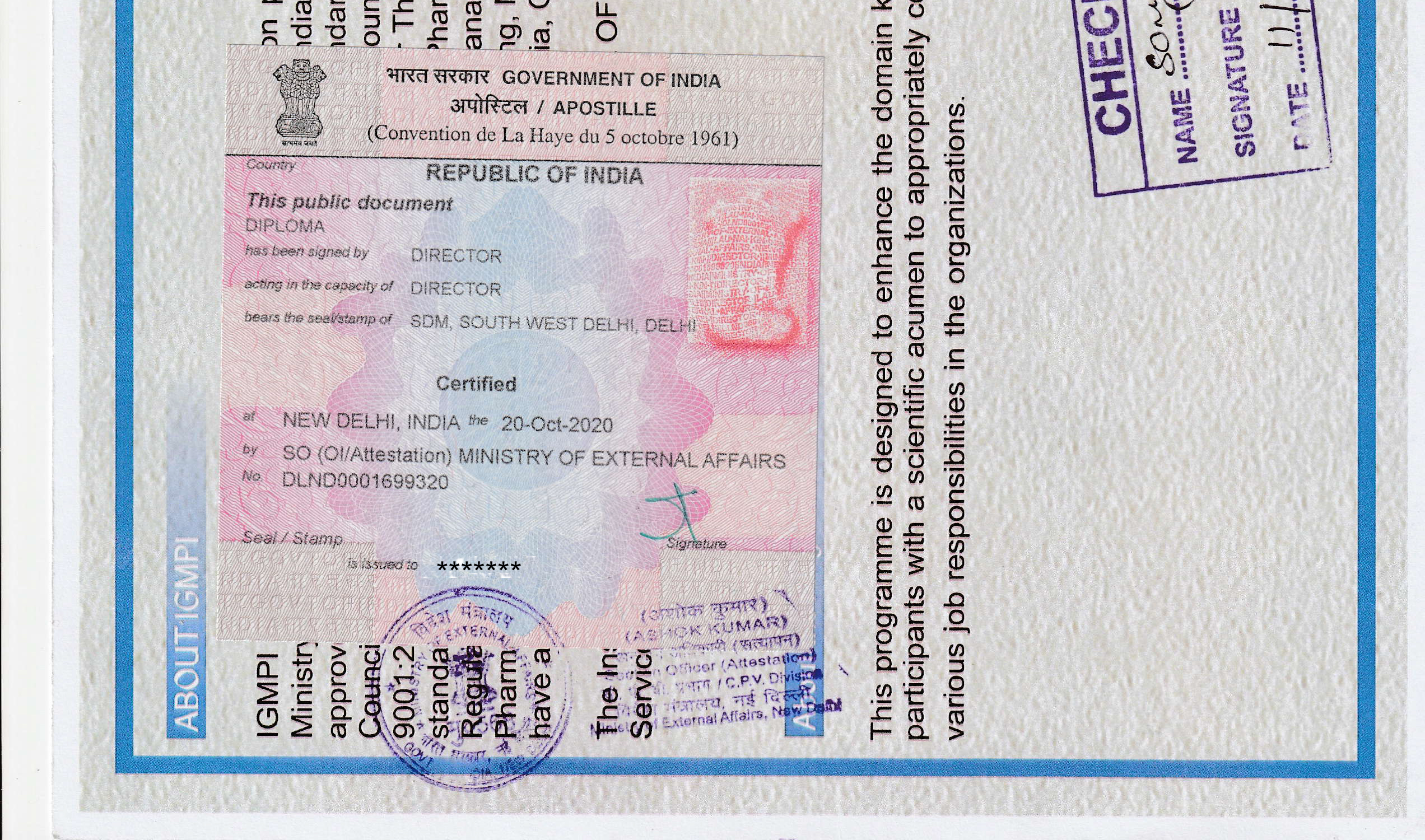
The Institute of Good Manufacturing Practices India, an autonomous Institute recognised by the Ministry of Commerce & Industry, Government of India is duly licensed and certified by Bureau of Indian Standards (BIS) under Bureau of Indian Standards (Conformity Assessment) Regulations 2018 (Active license number: ERO/EOMSM/L-8000027) for offering education and training programmes in the sectors of Pharmaceutical, Food & Nutrition, Healthcare, Environmental Health & Safety, Environmental Social and Governance (ESG), Psychology, Medical Devices, Cosmetics, Remote Sensing, Health Insurance, Product & Marketing Management, Cybersecurity, Fire Safety, and Renewable Energy in the regular Diploma (full or part-time) and online modes.


IGMPI is an accredited Vocational Institution (AVI no. 710367) of the Ministry of Education, Government of India. Institute of Good Manufacturing Practices India is Management System certified under NABCB accreditation. IGMPI is also approved by Food and Life Sciences Sector Skill Councils recognized by the National Council of Vocational Education and Training (NCVET).

The Post Graduate and Executive Diploma programmes of IGMPI in Good Manufacturing Practices, Regulatory Affairs, Intellectual Property Rights, Quality Assurance and Quality Control, Public Health, Nanotechnology, Hospital Management, Product Management, Sales and Marketing Management, Clinical Research, Medical Writing, Drug Discovery and Development, Pharmacovigilance, Medical Coding have been duly assessed and approved by Quality Council of India, Government of India based on fulfillment of QCI's following criteria:
    1. Course Content
    2. Course Design
    3. Course Material
    4. Instructors
    5. Class size & Attendance
    6. Facilities
    7. Evaluation of Students
    8. Written Examination
    9. Certificate
IGMPI is also approved by Food Safety and Standards Authority of India (FSSAI) (FSSAI ID: TPINS18). IGMPI® is licensed by Department of Food Safety & Drug Administration under the Drugs and Cosmetics Act, 1940 and registered under Food Safety and Standards Act 2006.
IGMPI is also approved by Sector Skills Council under National Skill Development Corporation (NSDC) setup by Ministry of Skill Development & Entrepreneurship, Govt of India (TC ID:TC342267).
IGMPI has been conferred with the prestigious "BUREAU OF INDIAN STANDARDS (BIS) AWARD OF HONOUR 2023". QUALITY COUNCIL OF INDIA (QCI) has also conferred IGMPI with D.L. SHAH NATIONAL QUALITY AWARD, Certificate of Merit & ASSOCHAM has conferred IGMPI with the Services Excellence Award based on excellence of its services to the students and training participants.
IGMPI's Membership with IPA
IGMPI is a Lifetime Institutional member of Indian Pharmaceutical Association (IPA).
Bureau of Indian Standards (BIS)
Bureau of Indian Standards (BIS) came into existence through an act of Parliament in 1987. BIS is the National Standard Body of India established under the BIS Act 2016 for the harmonious development of the activities of standardization, marking and quality certification of goods and for matters connected therewith or incidental thereto. The Bureau is a Body consisting of 25 members representing both Central and State governments, Members of Parliament, industry, scientific and research institutions, consumer organizations and professional bodies; with Union Minister of Consumer Affairs, Food and Public Distribution as its President and with Minister of State for Consumer Affairs, Food and Public Distribution as its Vice-President.
Quality Council of India (QCI)
Quality Council of India is set up by the Government of India to establish and operate national accreditation structure and promote quality through National Quality Campaign. QCI is registered as a non-profit society with its own Memorandum of Association. QCI is governed by a Council of 38 members and Chairman of QCI is appointed by the Prime Minister on recommendation of the industry to the government. The Department of Industrial Policy & Promotion, Ministry of Commerce & Industry, is the nodal ministry for QCI.
International Recognition
For providing its education and training services to overseas students, IGMPI is registered with the Directorate General of Foreign Trade, Government of India and our Export Import Code is AADCI7680Q.
IGMPI is an Institutional Member of the International Society for Quality in Health Care

Bureau of Indian Standards (BIS) is a member of International Organization for Standardization (ISO) and through the Indian National Committee (INC) which is a member of International Electrotechnical Commission (IEC). BIS is also a member of regional standards bodies like Pacific Area Standards Congress (PASC) and South Asian Regional Standards Organization (SARSO). India started taking part in IEC from 1911 and subsequently the then Indian Standards Institution (now BIS) took over the responsibility of Indian National Committee of IEC(INC-IEC) in 1949. Since then the INC-IEC is actively participating in the activities of the IEC both at the policy level and technical work and carrying out the responsibilities as member body of IEC Council. India is a member in Standards Management Board (SMB) of IEC since 2015.BIS has also signed Bilateral Cooperation Agreements (BCA)/Mutual Recognition Agreements (MRA) with the National Standards Bodies of several countries like Afghanistan, Bangladesh, Belarus, Egypt, European Union , Germany, Ghana, Greece, Indonesia, Iran, Japan, Jordon, Kenya, Kyrgyzstan, Mali, Mauritius, Nigeria, Russia, Saudi Arabia , Slovakia, Slovenia, Suriname, USA, UAE, Uzbekistan, Viet Nam, Bhutan, Brazil, Israel, Nepal, Pakistan and Sri Lanka.
National Accreditation Board for Certification Bodies (NABCB), Quality Council of India is a member of International Accreditation Forum (IAF) & Pacific Accreditation Cooperation (PAC) as well as signatory to its MLAs for Quality Management Systems, Environmental Management Systems and Product Certification. NABCB is also a Full Member of International Laboratory Accreditation Cooperation (ILAC) & Asia Pacific Laboratory Accreditation Cooperation (APLAC) as well as signatory to its MRAs for Inspection.
Professional Certification in Antibody Engineering (PCAE)
Therapeutic antibodies have revolutionised the treatment of cancer, autoimmune diseases, infectious diseases, and several chronic disorders, making antibody engineering one of the most dynamic and rapidly evolving fields in modern biopharmaceutical science. Advances in recombinant DNA technology, protein engineering, structural biology, and artificial intelligence have accelerated the development of highly specific and effective antibody-based therapeutics.
The Professional Certification in Antibody Engineering (PCAE) is designed to provide participants with a comprehensive understanding of the principles and applications of antibody engineering across the entire therapeutic development pipeline. The programme covers antibody discovery technologies, recombinant antibody engineering, structural and computational analysis, antibody–antigen interactions, expression and characterisation, pharmacology, manufacturing, quality assessment, regulatory requirements, and emerging innovations in therapeutic antibody development.
The curriculum combines scientific fundamentals with industry-oriented applications, enabling participants to understand contemporary antibody engineering strategies and the computational tools commonly employed in biologics research and development.
Programme Structure
International Affiliation with
Programme Structure
International Affiliation with
Module 1. Fundamentals of Antibody Engineering
- Immune system and adaptive immunity
- Antibody structure and function
- Antibody diversity and maturation
- Antigen–antibody interactions
- Therapeutic mechanisms of antibodies
- Therapeutic antibody landscape
Module 2. Antibody Discovery Technologies
- Hybridoma technology
- Phage display
- Yeast display and ribosome display
- Single B-cell antibody discovery
- Antibody library construction and screening
- Lead antibody identification and selection
Module 3. Antibody Sequence Analysis and Design
- Retrieving antibody sequences from UniProt and IMGT
- Performing germline gene assignment and V(D)J analysis using IgBLAST
- Identifying framework regions and CDRs using IMGT/V-QUEST
- Comparing antibody sequences using Clustal Omega
- Sequence annotation and therapeutic antibody analysis
- Designing and optimising antibody sequences for engineering
Module 4. Recombinant Antibody Engineering
- Recombinant antibody design and expression constructs
- Humanisation and CDR grafting
- Affinity maturation strategies
- Fc engineering for improved effector functions
- Stability and developability engineering
- Rational antibody optimisation
Module 5. Antibody Formats and Engineering Strategies
- Monoclonal antibodies
- Antibody fragments (Fab, scFv and diabodies)
- Nanobodies
- Bispecific and multispecific antibodies
- Antibody–drug conjugates
- Fc-fusion proteins and engineered antibody formats
Module 6. Structural Antibody Engineering
- Fundamentals of antibody three-dimensional structure and domain organisation
- Predicting antibody structures using ColabFold (AlphaFold)
- Validating predicted structures
- Visualising and analysing antibody structures using PyMOL
- Identifying epitopes and paratopes through structural analysis
- Applying structure-guided engineering to optimise antibody affinity, specificity and stability
Module 7. Antibody–Antigen Interaction Engineering
- Understanding molecular recognition and binding interfaces
- Predicting B-cell epitopes using the IEDB Analysis Resource
- Performing antibody–antigen docking using HADDOCK
- Analysing binding interfaces using PDBePISA
- Interpreting affinity and specificity for antibody optimisation
- Applying computational insights to improve antibody binding
Module 8. Antibody Expression, Characterisation and Quality Assessment
- Mammalian and microbial expression systems
- Antibody purification strategies
- Physicochemical characterisation
- Functional characterisation and biological activity assays
- Glycosylation, aggregation and stability assessment
- Developability and quality attribute evaluation
Module 9. Computational Antibody Engineering
- Mining therapeutic antibody structures from SAbDab and the Protein Data Bank (PDB)
- Comparative structural analysis of therapeutic antibodies
- Integrating sequence and structural information for antibody optimisation
- AI-assisted interpretation of antibody structures
- Computational evaluation of engineered antibody candidates
- Case studies in computational antibody engineering
Module 10. Pharmacology and Clinical Development of Therapeutic Antibodies
- Mechanisms of action of therapeutic antibodies
- Pharmacokinetics and pharmacodynamics
- Immunogenicity and anti-drug antibodies
- Biomarkers and patient selection
- Clinical development pathway
Module 11. Manufacturing and Regulatory Considerations
- Upstream processing and recombinant antibody production
- Downstream purification and process development
- Critical quality attributes and process control
- Good Manufacturing Practices (GMP)
- Regulatory requirements for therapeutic antibodies
- Chemistry, Manufacturing and Controls (CMC)
Module 12. Industry Case Study
Eligibility
Graduates in any discipline are eligible for our Post Graduate Diploma, Executive Diploma and Professional Certifications Programmes. 10+2 pass-outs are eligible for our Under Graduate Diploma and Diploma holders of two to three years course duration are also eligible for the PG Diploma.
Programme Duration
The minimum duration to complete the Professional Certification programme is 6 months and maximum is 12 months.
Programme Mode
Registration is currently open for Part-time (Online Live Classes) mode.
Programme Deliverables
A comprehensive study material (for 6 months Professional Certification) for all the modules in hard copies ensuring the needs of the audience. The accompanying training material is appropriately aligned with the current Industry’s expectations.
- Assignments for all the programme modules for continuous evaluation and guidance.
- Interactive or online live sessions on all key areas of the programme giving all flexibility to the participants.
- Part-time (Online Live Classes) for all the modules will be conducted on the weekends. Moreover, a doubt clearing session will also be scheduled before the examination.
- All the efforts are made by IGMPI faculty members to make the entire programme modules easily understandable.
- Assessment and evaluation for all the programme modules in order to enhance the levels of competencies and skills of the participants leading towards the objective of application in the job.
- At the end of each programme modules, the trainers shall obtain feedback from the participants using specially designed questionnaires.
- All learning and training delivery initiatives shall be conducted in English.
Examination & Certification
All the participants are obliged to timely appear for an exam at the end of the programme. After successful completion, the participants will be awarded Professional Certification in Antibody Engineering by IGMPI. For all the above mentioned modules elaborate programme material, self-assessment assignments and project work details would be provided by the Institute from time to time. Details get updated on the webpage as well.
Discipline in Classes and Examination
Every student is required to observe a disciplined behaviour during her/his classes, assessments & examinations and to follow instructions from the Professors. Any act of indiscipline may result into discredit & it will be mentioned in her/his academic report.
Placement Assistance & Corporate Relations
The Institute has partnered with many organizations for providing with placement assistance to in its participants. The robust placement cell comprises of senior level Human Resources professionals and Talent Acquisition experts which maintains close links with business and industry. We are engaged in promoting the employability of our participants by maintaining good rapport and relation with HR cell and recruiting managers of leading healthcare companies across the globe. The efforts of our placement cell also include helping with professional resume writing, interview skills & conducting mock interviews etc. In recent months the Institute has witnessed more and more participation from professionals working with global pharmaceutical giants like Aurobindo Pharma, Glenmark Generics, Cipla, Wockhardt, Pfizer, Abbott, Medtronic, Ipca Laboratories, Sun Pharmaceutical, Novartis, GlaxoSmithKline, Mankind Pharma, Lupin, etc.
Future career prospects
The global demand for therapeutic antibodies continues to grow with increasing investment in monoclonal antibodies, bispecific antibodies, antibody–drug conjugates, nanobodies, and other next-generation biologics. Consequently, there is an increasing need for professionals with specialised knowledge of antibody discovery, engineering, computational biology, biologics manufacturing, and translational research.
Upon successful completion of the programme, participants may pursue opportunities in biopharmaceutical and biotechnology companies, contract research organisations (CROs), contract development and manufacturing organisations (CDMOs), vaccine and biologics manufacturers, academic and government research institutions, and regulatory organisations. The programme also provides valuable knowledge for professionals engaged in biologics research and development, protein engineering, computational biology, quality assurance, manufacturing sciences, regulatory affairs, and clinical development of therapeutic antibodies.
The knowledge and skills acquired through this programme also provide a strong foundation for advanced research and professional development in antibody engineering, immunotherapy, biologics innovation, and AI-assisted therapeutic discovery.
Programme Fee Details
| S.No. | Programmes | Duration | Mode | Programmes Fee |
|---|---|---|---|---|
| 1 | Professional Certification | 6 months | Part-time (Online Live Classes) | USD 900 |
*Institute of Good Manufacturing Practices India will provide a 10% fee concession on the programme fee to reserved category candidates - Scheduled Caste (SC), Scheduled Tribe (ST), Person with disability (PwD) and 5% fee concession for Other Backward Classes (OBC), Economical Weaker Session (EWS) and Ex-servicemen who enroll in PG Diploma programmes.
*Up to 30% Need-based programme fee waivers will be awarded to our PG Diploma students with excellent academic records requiring financial support from the Institute (A student’s family income is assessed based on various financial resources).
Advisory Board and team
Our Advisory Board Members : https://igmpi.ac.in/our-advisors-and-team

Institute of Good Manufacturing Practices India
C-6, Qutab Institutional Area, Near Old JNU Campus, New Delhi–110016, India.
18001031071
(Toll Free -9:00 am to 5:30 pm IST-except on Central Government holidays)/
info@igmpi.ac.in