
(An Autonomous Body Recognized by Ministry of Commerce & Industry, Government of India)
Competency based placement focussed Education | Training | Research | Consultancy

C-6, Qutab Institutional Area, Near Old JNU Campus, New Delhi-110016
Regular | Part-time (Online Live Classes) Modes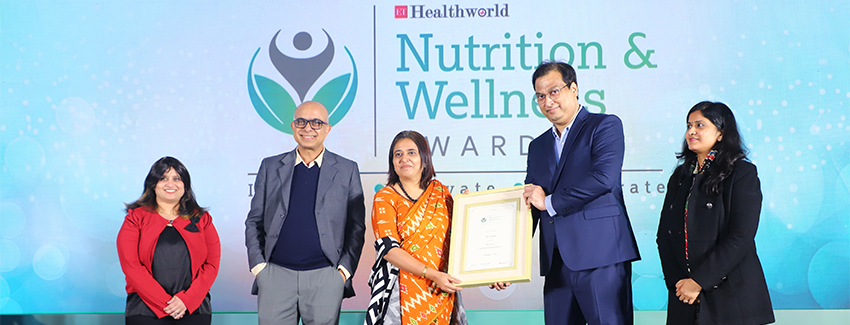


Professional Certification in Life Cycle Assessment (LCA)
Life Cycle Assessment (LCA) is a scientifically recognized methodology used to evaluate the environmental impacts associated with a product, process, or service throughout its entire life cycle—from raw material extraction (cradle) to manufacturing, distribution, use, and end-of-life disposal or recycling (grave or cradle-to-cradle).
With increasing regulatory pressure, climate commitments, ESG disclosures, carbon neutrality goals, and sustainable product design requirements, LCA has become a critical decision-making tool for industries, consultants, policymakers, and sustainability professionals. Standards such as ISO 14040 and ISO 14044, along with frameworks like GHG Protocol, Product Environmental Footprint (PEF), EPDs, and Scope 3 emissions, strongly rely on life-cycle thinking.
This programme is designed to provide participants with a clear, structured, and practical understanding of LCA, integrating global best practices, digital LCA tools, carbon footprinting, circular economy concepts, and recent regulatory developments. The training emphasizes real-world applications, case studies, and hands-on learning, enabling participants to apply LCA effectively in industry and consulting environments.
Programme Structure
Module 1: Introduction to Life Cycle Thinking and LCA
- Evolution of environmental management: end-of-pipe to life-cycle thinking
- What is Life Cycle Assessment (LCA)?
- Importance of LCA in sustainability, ESG, and climate action
- Cradle-to-grave, cradle-to-gate, gate-to-gate, and cradle-to-cradle concepts
- Applications of LCA in industry, policy, and product design
- Role of LCA in sustainable development goals (SDGs)
- Benefits of LCA for organizations: decision-making, compliance, innovation
Module 2: LCA Standards, Frameworks, and Guidelines
- ISO 14040 & ISO 14044 – principles and framework
- Relationship between LCA, carbon footprint, and water footprint
- Product Environmental Footprint (PEF) – EU perspective
- Environmental Product Declarations (EPDs)
- LCA linkage with GHG Protocol (Scope 1, 2 & 3)
- Role of LCA in ESG reporting (GRI, BRSR, CDP)
- Regulatory and market drivers for LCA (global & Indian context)
Module 3: Goal and Scope Definition
- Importance of goal definition in LCA studies
- Intended application and target audience
- Functional unit selection and system boundaries
- Allocation methods and assumptions
- Cut-off criteria and data quality requirements
- Attributional vs. consequential LCA
- Common errors and challenges in goal & scope definition
Module 4: Life Cycle Inventory (LCI) Analysis
- What is Life Cycle Inventory (LCI)?
- Data collection: primary vs. secondary data
- Process flow diagrams and system modeling
- Energy, material, water, and emission inventories
- Databases overview: Ecoinvent, GaBi, ELCD
- Data gaps, uncertainty, and data validation
- Best practices for inventory data management
Module 5: Life Cycle Impact Assessment (LCIA)
- Purpose and structure of LCIA
- Midpoint vs. endpoint impact categories
- Key impact categories:
- Climate change (GWP)
- Ozone depletion
- Acidification
- Eutrophication
- Photochemical smog
- Human toxicity & ecotoxicity
- Resource depletion
- Water scarcity
- Impact assessment methods (CML, ReCiPe, TRACI)
- Interpretation of LCIA results
Module 6: Interpretation, Reporting, and Critical Review
- Identifying significant issues and hotspots
- Sensitivity and uncertainty analysis
- Consistency and completeness checks
- Interpretation of results for decision-making
- Transparent LCA reporting as per ISO standards
- Critical review process and requirements
- Communicating LCA results to stakeholders
Module 7: LCA Software Tools and Digitalization
- Overview of popular LCA tools:
- SimaPro
- GaBi
- OpenLCA
- Introduction to LCA modeling workflows
- Role of digital tools and automation in LCA
- Integration of LCA with BIM, ERP, and PLM systems
- Use of AI and data analytics in sustainability assessments
- Limitations and challenges of LCA software
Module 8: Applications, Case Studies, and Future Trends
- LCA applications in:
- Manufacturing
- Construction & infrastructure
- Energy & renewables
- Food & agriculture
- Pharmaceuticals & chemicals
- Carbon footprinting and Scope 3 emissions using LCA
- LCA for eco-design and sustainable product development
- Circular economy and life-cycle thinking
- Indian and global case studies
- Future trends: net-zero, science-based targets, digital LCA
- Step-by-step roadmap to implement LCA in organizations
Eligibility
- Graduates / Diploma holders in Engineering, Science, Environmental Science, Sustainability, or allied disciplines
- ESG, EHS, and Sustainability professionals
- Environmental consultants and auditors
- Product designers and R&D professionals
- Quality, Operations, and Supply Chain managers
- Faculty members, researchers, and students
- Professionals involved in ESG, carbon management, and reporting
Programme Duration
The duration of the training is 5 days.
Programme Mode
Registration is currently open for Part-time (Online Live Classes) mode.
Programme Deliverables
- Comprehensive study material for all modules (soft copy)
- Live interactive sessions with expert faculty
- Industry-oriented explanations and practical examples
- Case studies and implementation guidance
- Participant feedback after each module
- Sessions conducted entirely in English
Assessment & Certification
An online assessment will be conducted at the end of the programme. Upon successful completion, participants will be awarded the Professional Certification in Life Cycle Assessment (LCA) by the Centre for Environmental Health and Safety, IGMPI.
Discipline in Classes and Examination
Every student is required to observe a disciplined behaviour during her/his classes, assessments & examinations and to follow instructions from the Professors. Any act of indiscipline may result into discredit & it will be mentioned in her/his academic report.
Placement Assistance & Corporate Relations
For the Post Graduate Diploma, Undergraduate Diploma, Executive Diploma and Professional Certification Programmes, we will provide placement assistance after the completion of the programme. The Institute has partnered with many organizations for providing placement assistance to its students. The robust placement cell comprises senior level Human Resources professionals and Talent Acquisition experts which maintains close links with business and industry. The efforts of our placement cell also include helping with professional resume writing, interview skills & conducting mock interviews etc.
In recent months the Institute has witnessed more and more participation from professionals working with global healthcare like , Jhpiego, SELCO Foundation, TATA Foundation, Samarthan NGO, PSI, UNICEF, WHO, HCL Foundation, IPE Global, Optum, PATH, AIIMS, Action against Hunger, Ekta Shakti Foundation, Seva Foundation, India HIV-AIDS Alliance, HLFPPT, Deepak Foundation, Novartis, LalPath Labs Ltd., Fortis Healthcare Ltd., HealthCare Global Enterprises Ltd., Indraprastha Medical Corporation Ltd., Narayana Hrudayalaya Ltd., Piramal Enterprises Ltd., Wockhardt Ltd., Cactus Communications, Public Health Foundations of India, Cytel, Religare Health Insurance Company Ltd., Deloitte, DuPont Sustainable Solutions, Bain & Company, Alvarez & Marsal, McKinsey & Company, etc. The IGMPI’s Corporate Resource Division actively recommends our students and training participants for various job requirements and specialized roles to Human Resource, Talent Acquisition as well as the heads of various departments in Pharmaceutical, Healthcare industries on regular basis.
Future Career & Organizational Benefits
- Improved sustainability and environmental performance
- Stronger ESG and carbon reporting capability
- Better decision-making for product and process design
- Enhanced compliance with global standards
- Career opportunities such as:
- LCA Analyst
- Sustainability Consultant
- ESG Specialist
- Carbon & Climate Analyst
- Environmental Auditor
- Sustainability Manager
Programme Fee Details
Programme fee details will appear here.
Last date for submitting completed Application Form: 16th Oct 2026.
For further enquiries, call or write to us on:
18001031071
(Toll Free -9:00 am to 5:30 pm IST-except on Central Government holidays)/
info@igmpi.ac.in
NEWSLETTER
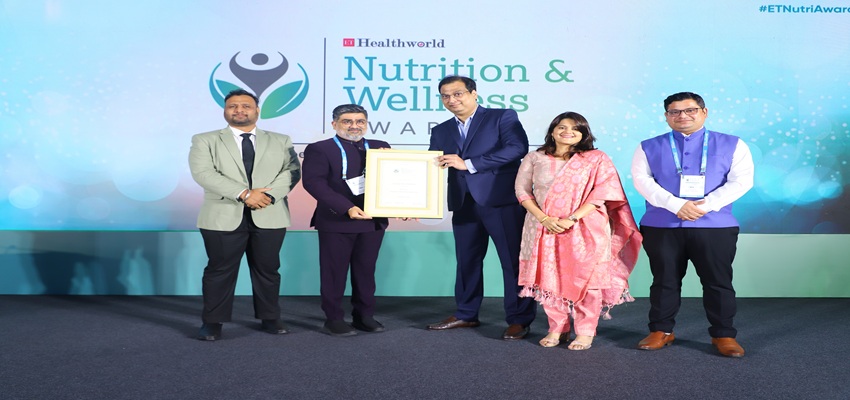
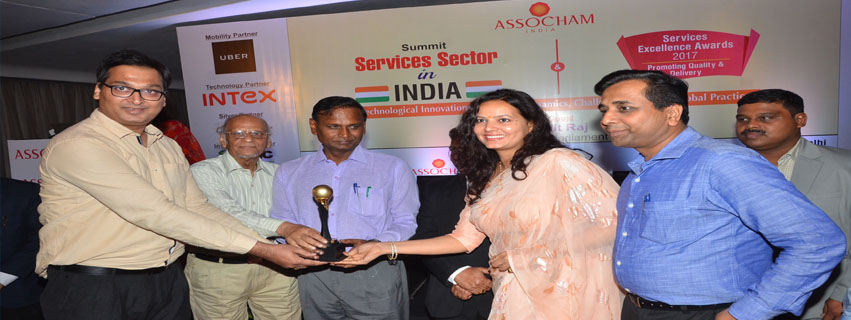
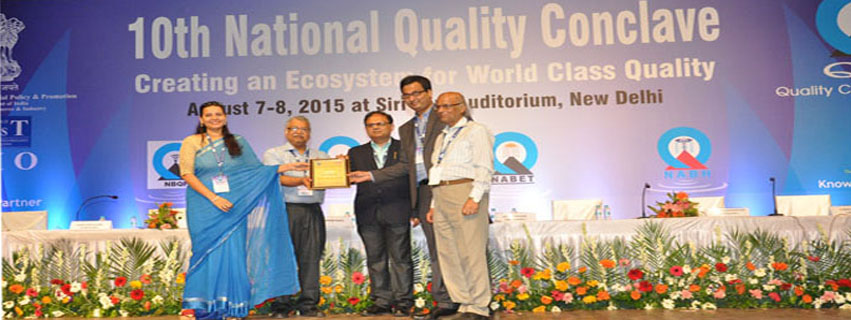
Institute of Good Manufacturing Practices India a part of the Grand Jury for the prestigious Nutriwell Conclave and Healthcare Awards, 2025: Our Director presenting the awards