
(An Autonomous Body Recognized by Ministry of Commerce & Industry, Government of India)
Competency based placement focussed Education | Training | Research | Consultancy


C-6, Qutab Institutional Area, Near Old JNU Campus, New Delhi-110016
Regular | Part-time (Online Live Classes) Modes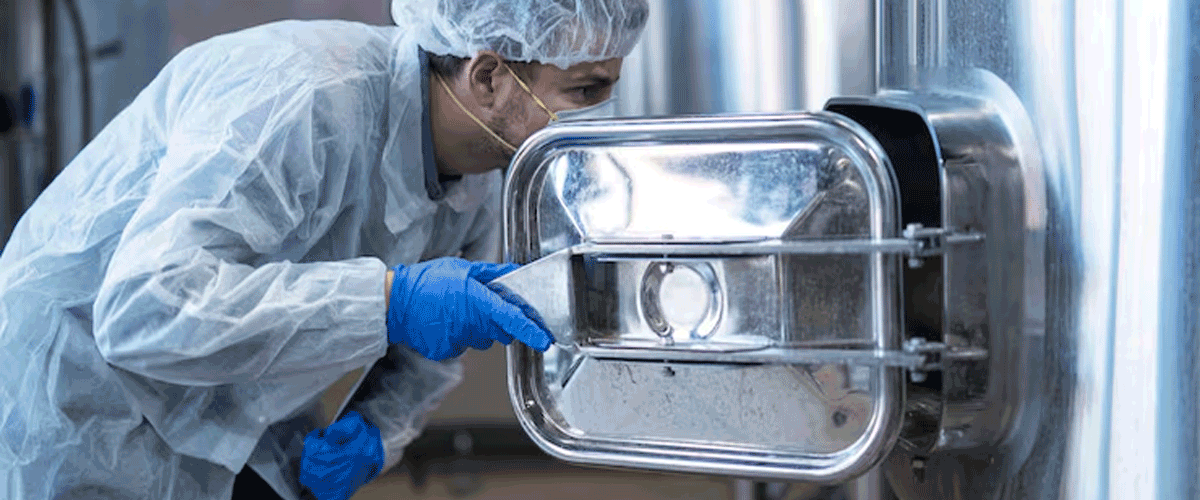
Surface Roughness in Pure Steam Systems — GMP Rule or Industry Best Practice?
In pharmaceutical manufacturing, pure steam plays a vital role in sterile and aseptic operations, particularly for sterilizing equipment, containers, and pipelines. A common debate centers on whether the internal surface roughness (Ra) of pipes—often specified as Ra < 0.8 µm—is a GMP requirement or simply an industry design standard.
Regulatory guidelines, such as EU GMP Part 1 (Sections 3.38–3.39), emphasize that equipment must prevent contamination and not adversely affect product quality. However, neither EU GMP nor FDA regulations define specific surface roughness criteria for pure steam systems. Instead, they focus on cleanability, suitability, and contamination prevention.
The Ra < 0.8 µm specification is thus not a direct GMP mandate but rather an industry best practice, adapted from WFI and PW system standards. Electropolishing may delay rouging but could cause particle flaking, making its use debatable.
Since rouge particles cannot be fully avoided, point-of-use filters (0.1–10 µm) are recommended to capture residues and stabilize pressure.
Conclusion: While not a regulatory requirement, maintaining Ra ≤ 0.8 µm demonstrates adherence to current best practices, ensuring both process integrity and product protection.
02-11-2025
📰 Recent News
- US FDA Closes Warning Letter Against Glenmark Pharmaceuticals Goa Facility
- Spanish Regulator Suspends GMP Certification and Manufacturing Activities at OCB Pharmaceutical
- Amorepacific Showcases AI-Based Research in Skin Science at IFSCC Congress
- BASF Highlights Sustainable Technologies for Next-Generation Skin Care
- CARBOGEN AMCIS Vionnaz Facility Completes First FDA Pre-Approval Inspection Without Form 483
- Zydus Ahmedabad Facility Receives One Observation Following USFDA cGMP Inspection
- Uniproma Advances Recombinant Biotechnology in Skincare Formulation
- Five New Beauty Technologies Highlighted at MakeUp in New York 2026
- WuXi Biologics Manufacturing Facilities Successfully Complete FDA GMP Inspection
- CDSCO Flags 191 Drug Samples for Quality Failures in August 2