
(An Autonomous Body Recognized by Ministry of Commerce & Industry, Government of India)
Competency based placement focussed Education | Training | Research | Consultancy



C-6, Qutab Institutional Area, Near Old JNU Campus, New Delhi-110016
Regular | Part-time (Online Live Classes) Modes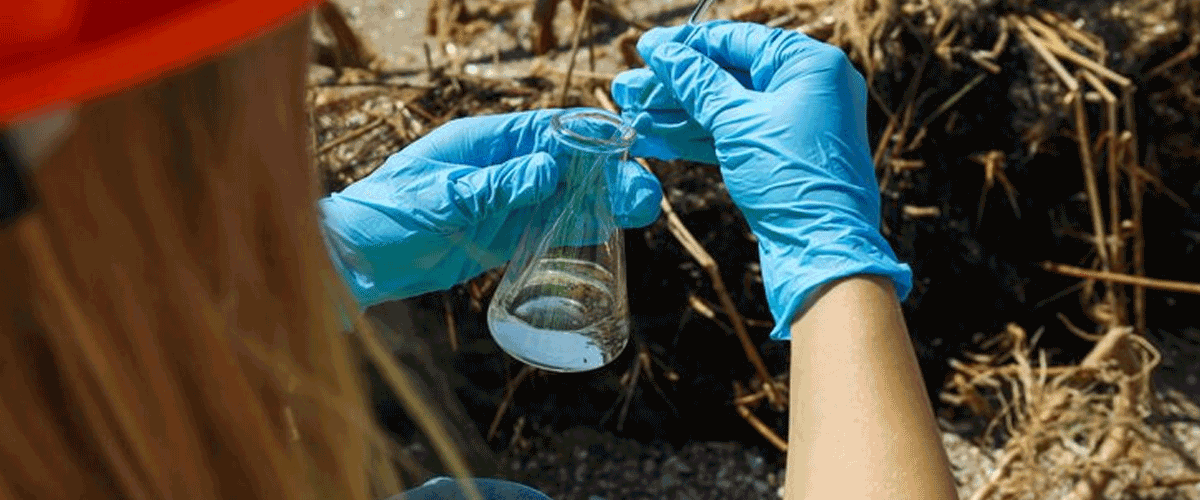
Microplastics Found Accumulating in Rural Woodlands, Study Warns
Green spaces long viewed as escapes from urban pollution are increasingly contaminated by microplastics, according to new research from the University of Leeds. The study, published in Environmental Pollution, found that rural woodlands can collect even more airborne plastic particles than nearby cities. Scientists discovered that trees and vegetation trap microplastics from the air, causing them to settle in natural environments.
Over a three-month period, researchers sampled air deposits in a rural woodland, a suburban town, and the city of Oxford. Surprisingly, the woodland recorded up to 500 plastic particles per square meter per day—nearly double the amount found in the city center. Most particles were extremely small, invisible to the naked eye, and included plastics commonly used in clothing and packaging.
Researchers warn that the widespread presence of tiny airborne plastics raises concerns about inhalation-related health risks. The findings suggest microplastic pollution is not limited to cities and may be far more pervasive than previously believed.
19-01-2026
📰 Recent News
- El Niño Forecast to Intensify, Raising the Risk of Extreme Weather Through Early 2027
- Mining and Oil Exploration Put Millions of Hectares of Protected Tropical Ecosystems at Risk
- Delhi Records Lowest September Average AQI in Five Years
- UN Calls for Urgent Action to Restore the World’s Forests
- Arctic Ocean Currents Found to Speed Carbon-Rich Phytoplankton to the Seafloor
- India’s Major Reservoirs Reach a Ten-Year Low as Monsoon Ends
- Indian Ecologists Call for Wider Ecosystem Monitoring Ahead of Expected El Niño
- Seven of Earth’s Nine Planetary Boundaries Now Breached, Scientists Warn
- Climate Change Linked to Glacier Collapse Behind Nepal-Tibet Floods
- Google Backs Large-Scale Carbon Removal Project in Brazil