
(An Autonomous Body Recognized by Ministry of Commerce & Industry, Government of India)
Competency based placement focussed Education | Training | Research | Consultancy

C-6, Qutab Institutional Area, Near Old JNU Campus, New Delhi-110016
Regular | Part-time (Online Live Classes) Modes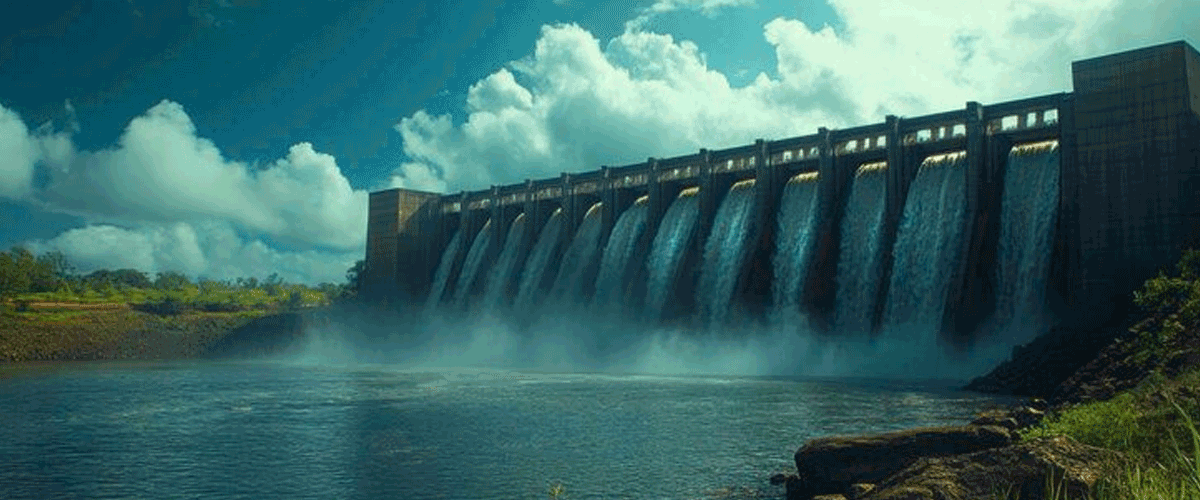
India’s Major Reservoirs Reach a Ten-Year Low as Monsoon Ends
Water levels in major reservoirs across India have fallen to their lowest level in a decade as the southwest monsoon approaches its seasonal conclusion. According to the latest assessment by the Central Water Commission, the 178 monitored reservoirs were holding water equivalent to about 70% of their combined storage capacity as of 28 September.
The current level is below the ten-year average of 76.62% for this period and is also lower than the 79% recorded during the corresponding period in 2025. The decline has raised concerns in several parts of the country, particularly regions that experienced below-normal rainfall during the monsoon season.
Southern India has recorded the most significant reduction. Reservoirs across Andhra Pradesh, Telangana, Karnataka, Kerala and Tamil Nadu were holding approximately 50% of their total capacity. This compares with more than 87% during the same period last year. The region has received rainfall significantly below its seasonal average.
Water storage has also declined in parts of northern, eastern and northeastern India. Eleven reservoirs in Himachal Pradesh, Punjab and Rajasthan were holding around 62% of their combined capacity, compared with more than 92% a year earlier. In the eastern and northeastern states, 31 reservoirs were at approximately 73% capacity.
India's southwest monsoon normally supplies more than 70% of the country's annual rainfall and plays an important role in replenishing reservoirs used for drinking water, irrigation and electricity generation.
The country had received rainfall around 12% below normal by 28 September. With the monsoon season scheduled to end on 30 September, officials expect limited opportunity for a substantial improvement in reservoir levels during the current season.
The reduced storage comes at a time when some states are already experiencing water stress, adding pressure on water-resource management as the country enters the post-monsoon period.
29-09-2026
📰 Recent News
- El Niño Forecast to Intensify, Raising the Risk of Extreme Weather Through Early 2027
- Mining and Oil Exploration Put Millions of Hectares of Protected Tropical Ecosystems at Risk
- Delhi Records Lowest September Average AQI in Five Years
- UN Calls for Urgent Action to Restore the World’s Forests
- Arctic Ocean Currents Found to Speed Carbon-Rich Phytoplankton to the Seafloor
- India’s Major Reservoirs Reach a Ten-Year Low as Monsoon Ends
- Indian Ecologists Call for Wider Ecosystem Monitoring Ahead of Expected El Niño
- Seven of Earth’s Nine Planetary Boundaries Now Breached, Scientists Warn
- Climate Change Linked to Glacier Collapse Behind Nepal-Tibet Floods
- Google Backs Large-Scale Carbon Removal Project in Brazil