
(An Autonomous Body Recognized by Ministry of Commerce & Industry, Government of India)
Competency based placement focussed Education | Training | Research | Consultancy


C-6, Qutab Institutional Area, Near Old JNU Campus, New Delhi-110016
Regular | Part-time (Online Live Classes) Modes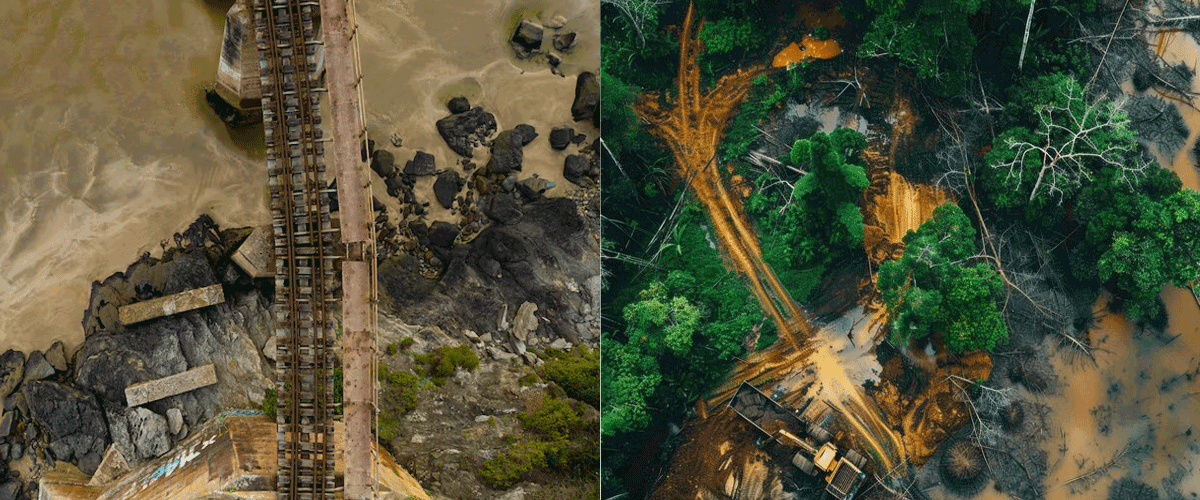
Mining and Oil Exploration Put Millions of Hectares of Protected Tropical Ecosystems at Risk
Millions of hectares of protected tropical ecosystems face potential threats from mining concessions and oil and gas exploration, according to a new analysis released by environmental organisation Earth Insight and its partners. The findings raise concerns about the effectiveness of international efforts to conserve 30% of the world's land, freshwater and oceans by 2030.
The research used spatial analysis to examine the overlap between protected and conserved areas and locations allocated for extractive industries across tropical regions. It found that oil and gas blocks overlap with more than 61 million hectares of protected and conserved land, while mining concessions cover an additional 42.7 million hectares within these areas.
The findings highlight a gap between official conservation commitments and the actual protection of ecosystems. Governments have agreed to the global 30-by-30 target under the Kunming-Montreal Global Biodiversity Framework. However, existing commitments are projected to protect approximately 23% of the world's land and oceans by 2030, falling short of the agreed objective.
Researchers caution that increasing the area designated as protected will not necessarily safeguard biodiversity if industrial activities continue within those boundaries. Mining and energy projects can damage habitats, fragment forests, disturb wildlife and place pressure on fragile ecosystems. In some locations, industrial development has already affected protected landscapes.
The report also identifies opportunities for governments to prevent further damage. Many concessions have not yet received final licences, meaning authorities may still be able to withdraw or revise permissions before extraction begins. The researchers advocate stronger safeguards, the exclusion of damaging industrial activities from sensitive areas and better enforcement of conservation regulations.
The findings were released ahead of international biodiversity discussions scheduled in Armenia. The report calls for conservation progress to be measured not only by the area protected, but also by the quality of protection and the long-term condition of ecosystems.
08-10-2026
📰 Recent News
- El Niño Forecast to Intensify, Raising the Risk of Extreme Weather Through Early 2027
- Mining and Oil Exploration Put Millions of Hectares of Protected Tropical Ecosystems at Risk
- Delhi Records Lowest September Average AQI in Five Years
- UN Calls for Urgent Action to Restore the World’s Forests
- Arctic Ocean Currents Found to Speed Carbon-Rich Phytoplankton to the Seafloor
- India’s Major Reservoirs Reach a Ten-Year Low as Monsoon Ends
- Indian Ecologists Call for Wider Ecosystem Monitoring Ahead of Expected El Niño
- Seven of Earth’s Nine Planetary Boundaries Now Breached, Scientists Warn
- Climate Change Linked to Glacier Collapse Behind Nepal-Tibet Floods
- Google Backs Large-Scale Carbon Removal Project in Brazil