
(An Autonomous Body Recognized by Ministry of Commerce & Industry, Government of India)
Competency based placement focussed Education | Training | Research | Consultancy



C-6, Qutab Institutional Area, Near Old JNU Campus, New Delhi-110016
Regular | Part-time (Online Live Classes) Modes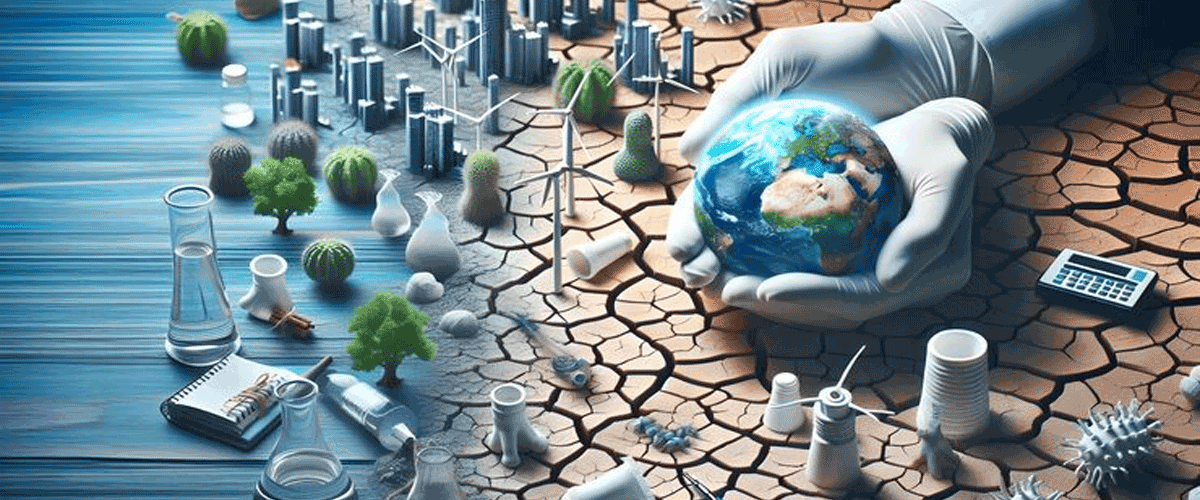
Toxic Chemicals and Climate Change Threaten Fertility
A recent review in NPJ Emerging Contaminants highlights how exposure to toxic chemicals, particularly endocrine-disrupting compounds, may impair fertility in humans and wildlife, with climate change intensifying these effects. Species across ecosystems—from insects to mammals—face simultaneous exposure to synthetic pollutants and rising temperatures, both of which can damage reproductive health by affecting sperm and egg quality.
The study notes that these combined stressors also weaken overall health and reduce the ability of organisms to adapt, contributing to biodiversity loss. Alarmingly, some of these chemicals can have multi-generational effects, meaning their impact may persist long after initial exposure.
Researchers stress that once released, such chemicals accumulate in the environment and interact with other global pressures. They call for stronger regulatory approaches that evaluate chemicals collectively rather than individually, alongside broader action on climate change to safeguard long-term ecological and human health.
04-05-2026
📰 Recent News
- El Niño Forecast to Intensify, Raising the Risk of Extreme Weather Through Early 2027
- Mining and Oil Exploration Put Millions of Hectares of Protected Tropical Ecosystems at Risk
- Delhi Records Lowest September Average AQI in Five Years
- UN Calls for Urgent Action to Restore the World’s Forests
- Arctic Ocean Currents Found to Speed Carbon-Rich Phytoplankton to the Seafloor
- India’s Major Reservoirs Reach a Ten-Year Low as Monsoon Ends
- Indian Ecologists Call for Wider Ecosystem Monitoring Ahead of Expected El Niño
- Seven of Earth’s Nine Planetary Boundaries Now Breached, Scientists Warn
- Climate Change Linked to Glacier Collapse Behind Nepal-Tibet Floods
- Google Backs Large-Scale Carbon Removal Project in Brazil