
(An Autonomous Body Recognized by Ministry of Commerce & Industry, Government of India)
Competency based placement focussed Education | Training | Research | Consultancy



C-6, Qutab Institutional Area, Near Old JNU Campus, New Delhi-110016
Regular | Part-time (Online Live Classes) Modes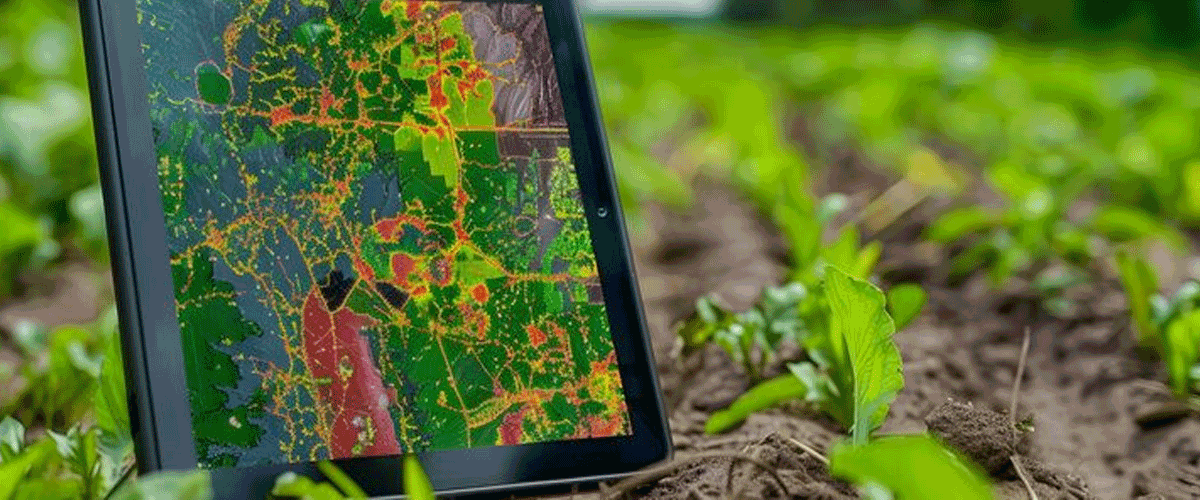
New Analytical Approach Maps Crop–Environment Relationships in Arid Agriculture
Researchers have developed a new analytical approach to examine the complex relationship between crops and environmental conditions in arid agricultural regions. Published in Scientific Reports, the study uses robust unsupervised clustering to identify different crop–environment patterns based on soil and weather-related variables.
Agriculture in dry regions is influenced by several interacting factors, including soil nutrients, rainfall, temperature and humidity. Understanding these relationships can be difficult, particularly when reliable crop labels, yield information or field-level suitability assessments are unavailable. The researchers therefore explored whether machine-learning techniques could identify meaningful environmental patterns without relying on predetermined crop categories during the initial analysis.
The study considered seven variables: nitrogen, phosphorus, potassium, soil pH, temperature, humidity and rainfall. Researchers examined a dataset involving 12 crops and used several clustering techniques, including K-Means, Gaussian mixture modelling, DBSCAN and hierarchical agglomerative clustering.
The analysis ultimately identified six broad crop–environment regimes using K-Means. Repeated testing indicated that the clustering results were relatively stable. The researchers also used a Random Forest model to reproduce the resulting clusters and applied SHAP and LIME methods to understand which environmental factors contributed most strongly to the classification.
Rainfall emerged as the most influential variable, followed by nitrogen, potassium, phosphorus and humidity. Temperature and soil pH showed comparatively lower influence on the separation of the identified groups.
The researchers emphasised that the method is intended to improve understanding and interpretation of crop–environment patterns rather than directly recommend specific crops or predict yields. The approach could nevertheless provide researchers with a clearer way of examining agricultural environments in arid and semi-arid regions.
The study demonstrates how interpretable data-analysis methods can be combined with agricultural and environmental information to study complex farming systems without relying solely on conventional field-level classifications.
22-09-2026
📰 Recent News
- New Farm Machinery Offers Thai Rice Farmers an Alternative to Stubble Burning
- Long-Term Use of Farmyard Manure Improves Soil Health and Sustains Crop Yields
- Punjab Stakeholders Develop Coordinated Strategy for Sustainable Crop-Residue Management
- Soil Microbes and Genomic Research Could Strengthen Carbon Storage in Agriculture
- Kansas Farmers Receive Grants to Test Sustainable Farming Practices
- Brazil Turns to Cocoa Agroforestry as Part of Amazon Restoration Efforts
- New Analytical Approach Maps Crop–Environment Relationships in Arid Agriculture
- Agriculture Minister Calls for Agroecology and Crop Diversification to Promote Sustainable Farming
- Dryland Congress Calls for Wider Adoption of Climate-Resilient Farming Solutions
- Soil-Carbon Payments Reach More Than 2,500 Farmers in Punjab and Haryana