
(An Autonomous Body Recognized by Ministry of Commerce & Industry, Government of India)
Competency based placement focussed Education | Training | Research | Consultancy

C-6, Qutab Institutional Area, Near Old JNU Campus, New Delhi-110016
Regular | Part-time (Online Live Classes) Modes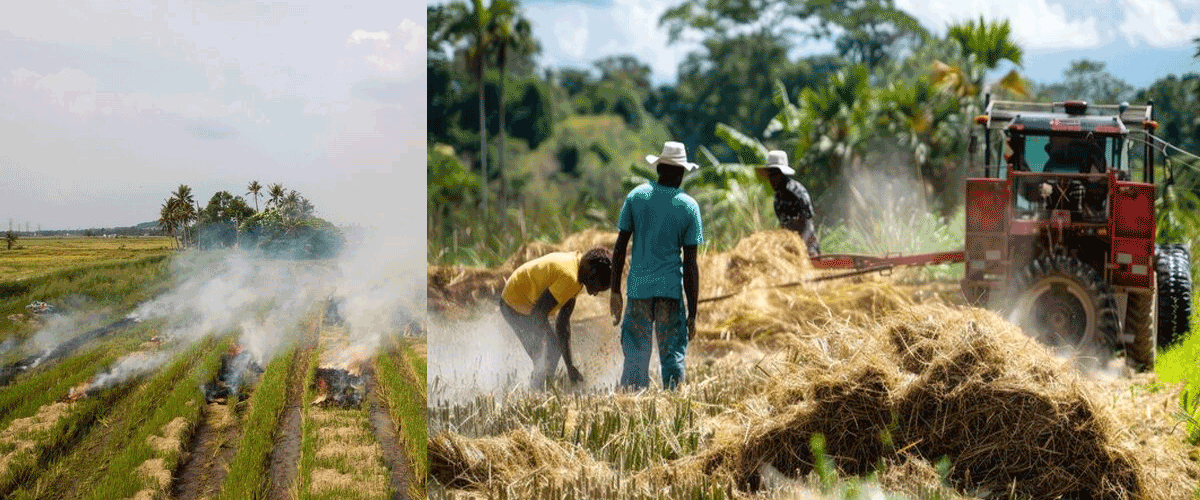
New Farm Machinery Offers Thai Rice Farmers an Alternative to Stubble Burning
A rice farmer in Thailand has trialled agricultural machinery designed to manage crop residues without burning them, offering a practical alternative to a practice associated with air pollution and soil degradation. The initiative was highlighted in an October 2026 sustainability update by CNH, the agricultural equipment company whose New Holland brand supplied the machinery.
Pichai Tosa, a rice and mung bean farmer in Nakhon Sawan province in central Thailand, tested a New Holland TT3.50 tractor fitted with a mulcher during the 2026 rice harvest. The equipment was used to chop rice straw so that the residue could remain on the field or be incorporated into the soil instead of being burned.
Burning leftover straw is a quick way to clear agricultural land before the next planting cycle. However, the practice releases pollutants and greenhouse gases into the atmosphere. The intense heat can also damage soil microorganisms and contribute to the loss of soil carbon. According to CNH, approximately 4.8 million tonnes of rice straw are burned annually in the plains of central Thailand.
Retaining and managing crop residues offers an alternative approach. When handled appropriately, plant material can return organic matter to the soil, help conserve moisture and support soil health. Mechanised residue management may also help farmers prepare fields for subsequent crops without relying on open burning.
CNH said that machinery alone is not sufficient to encourage widespread adoption. Farmers also need practical training, demonstrations and support suited to local agricultural conditions. The company highlighted a similar partnership-based approach to residue management in India through its Sustainable Environment Solution programme, which combines mechanised baling with farmer training and field demonstrations.
The Thai trial illustrates how suitable farm equipment and local collaboration can help address agricultural pollution while making productive use of crop waste. Wider adoption, however, will depend on factors such as equipment affordability, field conditions and the practical needs of individual farmers.
08-10-2026
📰 Recent News
- New Farm Machinery Offers Thai Rice Farmers an Alternative to Stubble Burning
- Long-Term Use of Farmyard Manure Improves Soil Health and Sustains Crop Yields
- Punjab Stakeholders Develop Coordinated Strategy for Sustainable Crop-Residue Management
- Soil Microbes and Genomic Research Could Strengthen Carbon Storage in Agriculture
- Kansas Farmers Receive Grants to Test Sustainable Farming Practices
- Brazil Turns to Cocoa Agroforestry as Part of Amazon Restoration Efforts
- New Analytical Approach Maps Crop–Environment Relationships in Arid Agriculture
- Agriculture Minister Calls for Agroecology and Crop Diversification to Promote Sustainable Farming
- Dryland Congress Calls for Wider Adoption of Climate-Resilient Farming Solutions
- Soil-Carbon Payments Reach More Than 2,500 Farmers in Punjab and Haryana