
(An Autonomous Body Recognized by Ministry of Commerce & Industry, Government of India)
Competency based placement focussed Education | Training | Research | Consultancy



C-6, Qutab Institutional Area, Near Old JNU Campus, New Delhi-110016
Regular | Part-time (Online Live Classes) Modes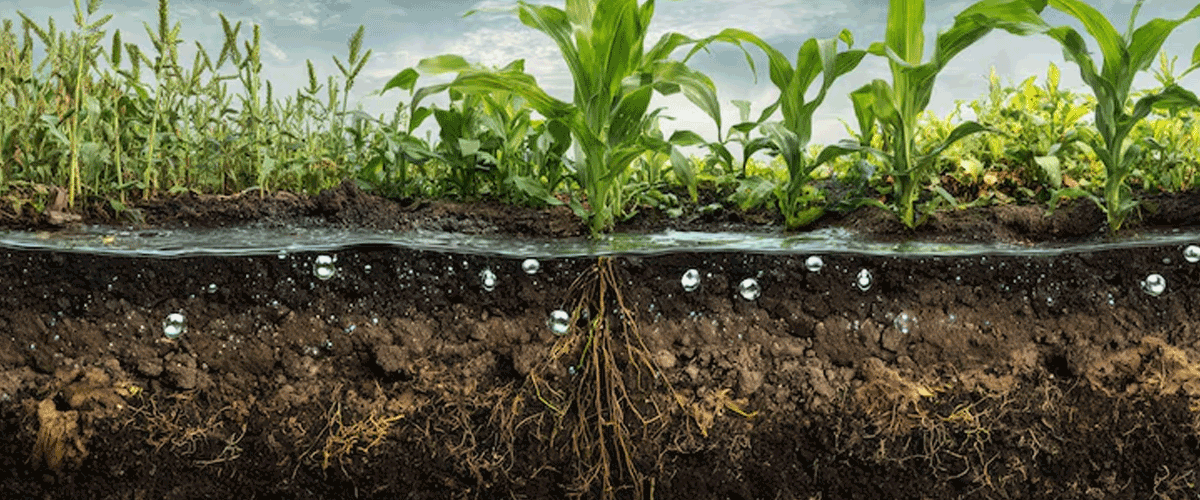
Soil Microbes Could Provide Early Warning of Changes in Regenerative Farm Health
Scientists have identified soil microbes as potentially valuable early indicators for measuring whether regenerative agricultural practices are improving soil health and supporting carbon storage.
Researchers from North Carolina State University, North Carolina A&T State University and Emory University examined biological measurements that could reveal changes in soil carbon years before conventional measurements are able to detect them.
The team studied enzyme activity, microbial biomass—the living microorganisms present in soil—and microbial necromass, which consists of dead microbial material. These biological indicators can provide information about how carbon moves through and is stored within agricultural soils.
Microbial necromass is particularly significant because carbon contained in dead microorganisms can form strong chemical bonds with soil minerals. This can contribute to longer-term carbon storage and provide an indication of the soil's capacity to build carbon reserves.
Researchers tested regenerative practices involving different cover-crop combinations and conservation tillage within existing pecan and loblolly pine agroforestry systems. Differences emerged between the two tree systems, with pecan plots showing greater total biomass and different patterns of microbial respiration.
Enzyme activity also varied according to tree species and cover-crop treatment, providing early evidence of changes in nutrient cycling. Researchers found no significant differences in total carbon between minimum-tillage and no-tillage approaches.
Because measurable changes in total soil carbon can take many years to emerge, biological indicators could offer farmers and scientists a faster method of evaluating regenerative practices.
The findings suggest that monitoring microbial biomass, necromass and enzyme activity could provide earlier evidence of changes in soil health and carbon cycling than relying solely on traditional soil-carbon measurements.
10-09-2026
📰 Recent News
- New Farm Machinery Offers Thai Rice Farmers an Alternative to Stubble Burning
- Long-Term Use of Farmyard Manure Improves Soil Health and Sustains Crop Yields
- Punjab Stakeholders Develop Coordinated Strategy for Sustainable Crop-Residue Management
- Soil Microbes and Genomic Research Could Strengthen Carbon Storage in Agriculture
- Kansas Farmers Receive Grants to Test Sustainable Farming Practices
- Brazil Turns to Cocoa Agroforestry as Part of Amazon Restoration Efforts
- New Analytical Approach Maps Crop–Environment Relationships in Arid Agriculture
- Agriculture Minister Calls for Agroecology and Crop Diversification to Promote Sustainable Farming
- Dryland Congress Calls for Wider Adoption of Climate-Resilient Farming Solutions
- Soil-Carbon Payments Reach More Than 2,500 Farmers in Punjab and Haryana